With this series of blog posts, I will be giving a brief background on a specific method of sleep training and share some pros and cons of each. My aim is to educate and inform, not to throw criticism towards any parent who may choose a specific method. I just want to be clear that there are many forms of sleep training methods (many I won’t be touching on) so you need to choose the best strategy for your specific child.
What is the Camp Out Method?
To be honest, I am unsure as to the exact origins of the “Camp Out” Method of sleep training. It certainly similar to The Ferber Method of sleep training but with a difference. It can be another variance of “controlled crying” but has a more hands, gentle approach. This method may also be known as “The Sleep Lady Shuffle” devised from Kim West author of The Sleep Lady’s Good Night Sleep Tight. Another version of this method is “Stay in the Room” devised by Dana Obleman author of The Sleep Sense Program. Another name is the “Gradual Extinction Method.”
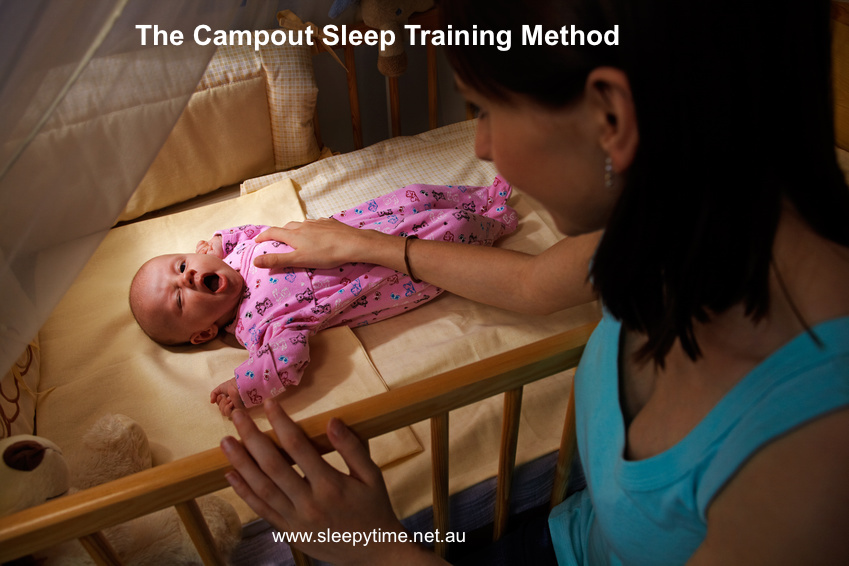
The Camp Out Method of sleep training enables you to be in the room with your baby offering lots of support and comfort. Over 10-14days, you gradually move away from your baby’s cot and fade out any verbal and physical reassurance given.
What does the Camp Out Method aim to achieve?
The goal is for your baby to fall asleep independently, with moderate to lots of parent intervention that is faded out over a period of time. It is a gentle approach to change because you are very present through the process. It eliminates any negative sleep associations like rocking, feeding to sleep, dummy/pacifier, cuddling to sleep etc.
So how does the Camp Out Method work?
First of all, preparation is key. Make sure your baby…
- Isn’t overtired.
- Is well.
- Has a cool, dark, quiet place to sleep.
- Has a bedtime routine.
- Has a sleep phrase introduced.
- You have a mattress or chair that can be moved easily.
With this method, you place your baby into the cot, awake as possible, and lie on the mattress or sit in the chair. You may offer physical touch, pick your baby up for a cuddle and offer verbal cues until your baby is asleep. Once your baby is asleep you can leave the room. Every few nights or so you gradually move your mattress or chair away from your baby’s cot. You also fade out any oral and verbal comfort.
The Camp Out Method can take between 2-3weeks for your baby to be able to sleep independently. Progress can be slower compared to The Extinction Method and The Ferber Method.
Cons of The Camp Out Method
- Your baby can cry a lot more with this method compared to The Extinction Method and The Ferber Method. Babies often cry more when their parents are present in the room. Cortisol levels (stress hormone) are lower or non-existent but the cry can appear more intense.
- Your baby may become more stimulated and/or irritated with you being in the room.
- Your baby may not respond well to the verbal and/or physical contact when falling asleep.
- It can take longer to see progress compared to the Extinction and Ferber Methods.
- You may find it more stressful seeing your baby cry compared to hearing it from afar.
- You may need to stay with your baby for a long period of time before your baby falls asleep.
- This method is hard to execute if you have other children needing your attention at the same time.
Pros of The Camp Out Method
- You can continue to room share.
- You can continue to night-feed.
- You are able to offer physical and verbal comfort so it’s a very hands-on approach!
- It is a gentle approach to change.
- As you are present in the room, you are able to see exactly how your baby is responding to the change and you can support them through it.
- This is a good method for older children who try to escape from their room or have separation issues.
Final thoughts from me…
This is a really good method as it accommodates babies and children from about 4months of age. I like how hands on and responsive it is.
When choosing a method of sleep training it is important to remember that the approach is only one piece of the puzzle. Finding the cause of the difficult sleep comes first. Next you need to establish positive sleep cues for your baby. Lastly comes the sleep training method. With any sleep training method, it is really important to listen to your baby. When families work with me, quite often the method changes and evolves depending on how the baby is coping and the signs he is giving me.
Other forms of sleep training methods that will be covered in this 4part series are: The Extinction Method, The Ferber Method, The Camp Out Method and the No Cry Method.

Child Sleep Consultant for Sleepytime