Tag Archives: controlled crying

Sleep Training Series – The Extinction Method Explained

With this series of blog posts, I will be giving a brief background on a specific method of sleep training and share some pros and cons of each. My aim is to educate and inform, not to throw criticism towards any parent who may choose a specific method. I just want to be clear that there are many forms of sleep training methods, many that I won’t be covering, so you need to choose the best strategy for your specific child.

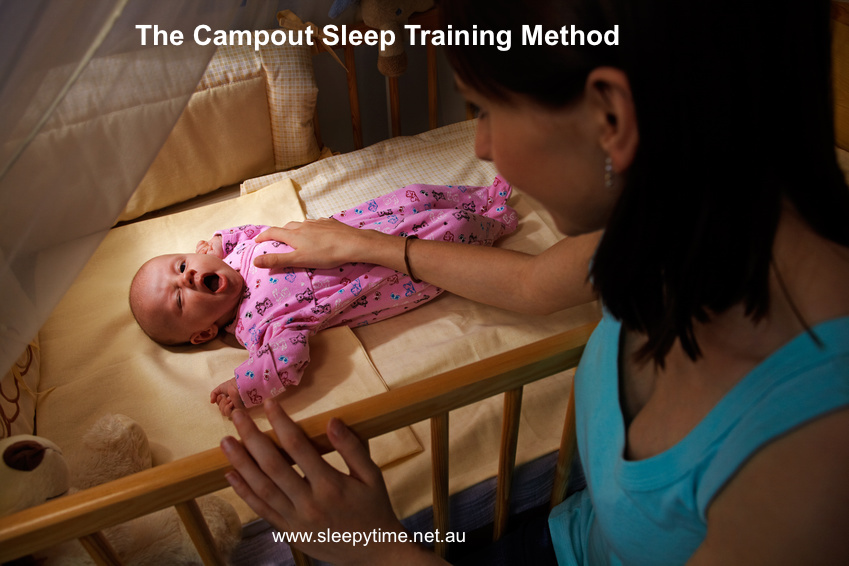
This method isn't for the faint hearted.
This method isn’t for the faint hearted.

What is the Extinction Method?

The Extinction Method, often regarded by sleep professionals as the “cry-it-out” method, because in a nutshell, a baby is left to cry themselves to sleep with no interaction or reassurance by the parent.

American paediatrician, Dr Marc Weissbluth, author of “Healthy Sleep Habits” is the biggest advocate for this type of sleep training. Interestingly this method is popular with paediatricians and doctors because it is often the only method familiar to them.

What does the Extinction Method aim to achieve?

The goal is for your baby to fall asleep independently, without any help from an adult, at anytime. It eliminates any negative sleep associations like rocking, feeding to sleep, dummy/pacifier, cuddling to sleep etc very quickly.

So how does the Extinction Method work?

First of all, preparation is key. Make sure your baby…

  1. Isn’t overtired.
  2. Is well.
  3. Has a cool, dark, quiet place to sleep.
  4. Has a bedtime routine.

After the bedtime routine, you place your baby into the cot – AWAKE. The next step is to leave the room and never some back until morning time.

This method suggests that if you do come back into the room at anytime, your baby will become more distressed or stimulated and learn that if they cry, you will come and rescue them. These visits will encourage excessive, prolonged crying.

Cons of the Extinction Method

  • This sleep training method is the most extreme and controversial. It isn’t for the faint-hearted.
  • This method can be very distressing for the baby and the parents because there is no form of comfort or reassurance permitted.
  • This method doesn’t allow for mishaps like a dirty nappy, vomiting or being stuck in the cot rails. It is not recommended for a baby who needs to continue to feed during the night.
  • This method is not suitable for children in a bed because it is very likely your child will follow you out of the room.

Pros of the Extinction Method

  • Some babies and children want “all or nothing” meaning if you are not going to feed, rock, let me have a dummy etc then I want to be left alone thank you very much!! Any sort of gentle or medium sort of comfort can be more unsettling for some children so this method is often the last resort.
  • It can be very quick. Some parents claim that their baby is sleeping through the night after 2-3nights of implementation.

Final thoughts from me…

Before deciding to use this method, I recommend starting with a more gentle approach then moving towards the Extinction Method if that strategy isn’t working.

I do not recommend using this method for babies who need to continue to have feeds during the night as this can lead to feeding issues and weight complications. If unsure, speak to your doctor or health nurse professional first.

When choosing a method of sleep training it is important to remember that the approach is only one piece of the puzzle. Finding the cause of the difficult sleep comes first. Next you need to establish positive sleep cues for your baby. Lastly comes the sleep training method. With any sleep training method, it is really important to listen to your baby. When families work with me, quite often the method changes and evolves depending on how the baby is coping and the signs he is giving me.

Other forms of sleep training methods that will be covered in this 4part series are: The Extinction Method, The Ferber Method, The Camp Out Method and The No Cry Method.

Janelle Jeffery Child Sleep Consultant for Sleepytime
Janelle Jeffery
Child Sleep Consultant for Sleepytime
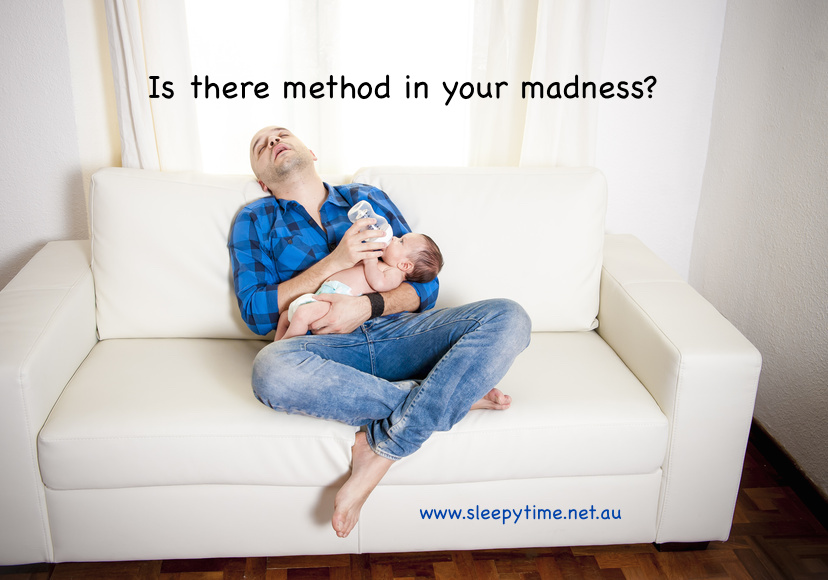


Is there method in your madness?

Have you felt like you have tried every method ever invented?


When I speak with frazzled parents about their child’s lack of sleep, I am always asked “I have tried everything and nothing has worked so why are you different?” and, “Do you practice “cry it out?”

I have considered this a lot lately because the “method” you use to help a child become an independent sleeper is engulfed in controversy. Everyone has an opinion and it is a polarising subject.

I want to let you in on a secret – it is not the method that is standing in the way of your child’s sleep success.

It doesn’t matter if you use {insert your method here}, they are all going to eventually fail because of this one thing. You haven’t actually addressed the root of the problem. If you don’t understand WHY your child is having difficulty sleeping through the night or is cat napping during the day, then whatever method you apply will not work because you are focusing on the wrong thing.

You sure are feeling frustrated, because you HAVE tried every method ever invented but you still have a child who cannot sleep. How do you solve this? Simple, hire me!

The first step before I write any sleep program is to perform a full sleep assessment. This enables me to establish the cause of your child’s sleep issue or issues. I make those necessary changes first. Next I look at establishing 5 sleep cues to prepare your child for sleep. The very last thing I decide upon is the method to achieve long-term sleep success.

So if you are tired of being tired and actually want to see the light at the end of the tunnel, contact me here. Change is ready for the taking, you just need reach out for my help.

Janelle Jeffery Child Sleep Consultant for Sleepytime
Janelle Jeffery
Child Sleep Consultant for Sleepytime

My Baby Refused to Co-sleep and What I Did About It.

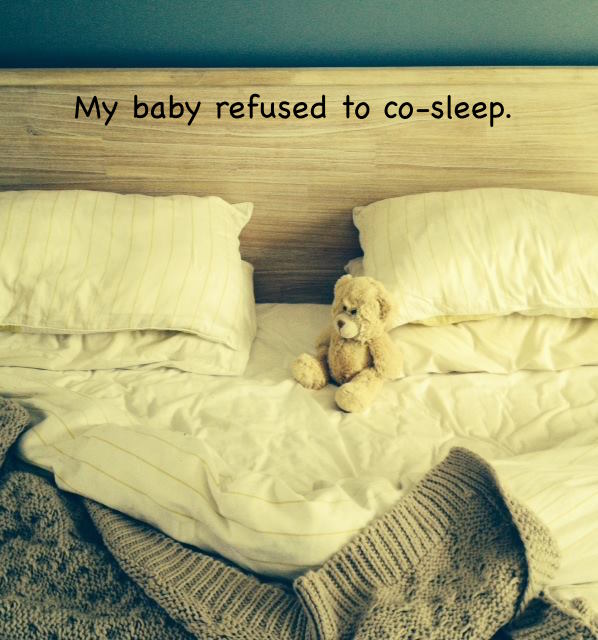
My baby refused to co-sleep


If I buy shoes that are too small for my daughter or push her into activities that she doesn’t enjoy or keep her away from the things that she excels at because it differs from what her peers wear/do/are good at does this mean I’m a good mother? Of course it doesn’t.


It is so easy to see in this example how expecting something from my daughter that doesn’t fit with her own unique comforts, interests, and abilities can begin to harm her physically, mentally, emotionally and spiritually.


I don’t see my role as a loving mother to coerce my daughter into a certain way of being or to tell her what she does and doesn’t need. It is my job to use my mothering instincts to listen very carefully and try all options available to me to create a safe, comforting, loving environment to encourage the optimal development of my little girl.


There is no doubt in my mind that you and all other mothers and fathers out there agree that we would do anything for the best interests of our children.

So why do we throw stones when one parent doesn’t push and force their beautiful baby into the mould that so perfectly fits our own baby – especially when it comes to sleep?


There is so much hate directed towards each other between the Cry-It-Out “dictators” and the Co-Sleeping “hippies”. My problem is not which method is chosen; my problem is why on earth does another baby’s needs bother you so much? (Notice how I said another baby’s needs?)


I’m not a sleep expert but I’ve tried almost all options available to me in order to help my baby girl to have restful sleep. We have all heard the horror sleep stories and I’m at neither extreme of the sleep scale but I suppose you could say my bub was closer to the no-sleep end of the spectrum.


Like some of us, I like a certain level of control in my life, and as diligent pregnant women I casually researched and talked to other mums to get advice and ideas on how to best raise our child. Before she was born, my husband and I compared notes and had a general idea of which direction we would want to take and how we could best implement these ideas.


Then our beautiful baby was born. I cuddled and hugged her, fed her to sleep, I laid down with her, I kept her by my side in a bassinet, I jumped at every murmur to feed, and cuddle and let her know I was with her. My husband stayed awake with us at every feed and every wake-up to let her know that he was there also. I carried her against me as much as I could.


She hated it. She cried and cried. Didn’t sleep in the car, didn’t sleep in the carrier, didn’t sleep in the pram, didn’t sleep in my bed, didn’t sleep in my arms. The only time she did sleep in any of these locations is only after crying until she was exhausted.


I thought I was doing the right thing by holding her close, showing I was there for her and living with her on me. It’s what she was used to after being in my belly for over 9months, it’s what she is supposed to want – right?


As a Registered Nurse and a Kinesiologist, ruling out a medical issue was first on the list. So if not that, then what was it? Why did she not do as the books said she would do? Why did she not like what the ‘experts’ said she would like?

It’s because she isn’t the print within the pages of a book, she isn’t a science experiment, she isn’t your child or your friend’s child, she is my child and she likes what she likes, and doesn’t like what she doesn’t like.


After 4 months of experimenting and trial and error, my husband and I were none-the wiser on what to do. We tried to co-sleep, we tried rocking her to sleep, we tried having her next to us in a bassinet, we tried having her outside our bedroom door, tried her in her own room and then briefly tried the cry-it-out method with friends and family there to monitor it with us – nothing worked and she would just cry herself to sleep.


It was heartbreaking – not to mention exhausting – to see our little girl struggle to get to sleep no matter what we did.


As corny as this may sound I couldn’t believe that I was unable to love-her to sleep like I was yearning to. She was, and still is such a bright, attentive, curious and happy baby by day but at naptime and bedtime it was an hour/s long process.


At this point, as with most 4-month olds, her development reached a new milestone, meaning her already short naps were getting less frequent and she began waking up more at night.


We knew it was time to get professional customised support but I was terrified of calling a sleep consultant.


I thought that I would have to re-live the cry-it-out torture but the thought of continuing to pace and rock my little girl to sleep while she cried and fought sleep for 40 minutes (after an hour-long breastfeed to get her sleepy) and then starting that whole process again after she woke 15minutes later pushed my sleep-deprived mind into making that call, booking that skype chat and listening to what our consultant, Janelle had to say.


Janelle was so thorough and created such a specific and personalised plan for our girl that I felt that maybe she could help us. I was doubtful that such a simple process could work seeing as I felt like I’d tried everything already, however we completed the program and it worked!


I cannot explain how it worked, other than seeing for myself that by rocking her in my arms I was assuming that she needed me to fall asleep, I was trying to make her fit into a mould of what I thought a baby’s sleep time should be like, but it turned out that I was hindering her and not meeting her unique needs.


I didn’t just learn how to help my daughter to sleep; I let go of my guilt and assumptions and let my daughter be her.  I accepted her for what she needed from me and for what she didn’t.  After changing my approach, she fell asleep within a fraction of the time; she was being put in bed awake and falling asleep on her own.


Nowadays my girl is 18 months old and still whines on falling asleep it’s just her way.


I’ve interrupted her whining-to-sleep process and asked if she was ok and she said “yes” and if she wanted me to leave and she said “yes”.


She now sleeps peacefully in the car, carrier, pram and bed but still doesn’t like the stimulation of physical contact when going to sleep. Luckily she makes sure she gets her fill of kisses and cuddles while she is awake!

Kate Lethbridge - Guest Blogger
Kate Lethbridge – Guest Blogger for Sleepytime


Kate Lethbridge is a Registered Nurse, Holistic Kinesiologist, Mind Body Medicine practitioner and mother who has a passion to facilitate others to achieve their biggest goals one-by-one by helping her clients become their ultimate self physically, mentally and emotionally.

For more about Kate and her services visit the following pages:

Website: http://www.avalonkinesiology.com

Facebook: https://www.facebook.com/avalonkinesiology

Pinterest: https://www.pinterest.com/av_kinesiology


All opinions represented within this article relate to the best interests of the author, her family and her child – please make your own health care choices are based on the best interests of your own child/ren and family. Most of all, please respect the needs of other babies and don’t throw stones at their mums.

Is it ok to leave your baby to cry?

Listening to your child cry can be difficult.

Crying is a sensitive subject and is often the topic of strong debate over social media amongst parents and professionals. I often avoid entering into it as I feel that the topic of crying is a multifaceted one and there is never the perfect answer.

I wanted to write about my personal experience with children who cry when they are learning to sleep independently. I am writing it to provoke thought and discussion, not to add fuel to the fire.

I am regularly asked by concerned parents, “do you use ‘cry-it-out’ methods?” This is a difficult question to answer because one person’s idea of CIO can be completely different to another person’s idea. My response is always this, “when you make changes to any child’s sleep habits there will always be some crying as the experience is different and unfamiliar to them. I use a variety of gentle techniques and will always work within your comfort level of crying.”

Asking parents to work within their own comfort level of crying is important but the main drive of this blog post is to explore not only how parents feel about crying, but also how the child feels about it. I will share with you two very different scenarios that happened recently.


Family 1 – Thomas was 15months old and he was taking a really long time to fall asleep at night. Mum and Dad were very comfortable with leaving Thomas to cry and would leave him for quite some time on his own until he finally fell asleep. Unfortunately after many months of leaving Thomas to cry, there was no reduction in the length it took for him to settle at night. Once I assessed Thomas’ sleep issues, I decided to not only amend his daytime nap to avoid overtiredness at bedtime, but I implemented a strategy where Thomas was offered regular reassurance from his parents as he was falling asleep. Leaving Thomas to cry was not necessarily wrong; it was just the wrong strategy for him.


Family 2- Henry was 8months old and he had many sleep associations that were hindering him becoming an independent sleeper. Henry’s parents were clear that they wanted a very slow and gentle process for him with minimal crying. Taking that on board, I wrote a sleep program where Henry would be offered lots of reassurance (like Thomas), and with very reduced periods of time where Henry was to be left alone to cry. What was interesting was that it became very clear early on that Henry became more upset and hysterical each time his parents tried to reassure him. Henry was telling his parents that he wanted to be left to figure it out for himself. This was a difficult situation for his parents but they soon realised it was important to attend to Henry’s needs the way he wanted it, not necessarily the way they wanted to give it. Once Henry was given some space to figure it out, he began sleeping independently.

Here I have presented two very different scenarios where parents had different comfort levels of crying. It is important to work within YOUR comfort level of crying, but it is essential to use a strategy that is right for your child. What works for one, may not work for another.

So if you are looking at helping your child to sleep independently, it is important that you not only choose a strategy that is perfect for your child, but find a sleep consultant who has a range of techniques because if you try to apply a ‘one size fits all’ approach like many books offer, it often doesn’t work and you end up with a distressed child and frazzled parents.


about-author


Janelle Jeffery

Child Sleep Consultant for Sleepytime