Tag Archives: sleep

Preparing for the new school year – A sleep perspective

Learning is tiring. Sleep is vital for child development.

For some of you, February marks the first time your child will attend school. Some of us have been here before but many of us will be feeling worried about how our children will cope (me included!).

With only a couple of weeks of holiday left, making sleep your priority will enable your child to have a smoother start to the year. Preparing your child needs to start tonight.


1) The Bedtime Routine – what you need to know.

Length: If the bedtime routine has become quite relaxed over the summer, it is time to get back on track. The bedtime routine should take about 30-40mins tops otherwise it can drag out and your child will become overtired. An overtired child will either struggle to fall asleep and/or have night wake ups. Some children once overtired can experience night terrors.

Steps: Beginning the bedtime routine with a bath or shower as this can enable your child to unwind from the day’s events. A wash can relax the body, triggering the mind to get ready for sleep.

A simple bedtime routine would look something like this:

  • Toilet then bath or shower
  • Brush teeth
  • Pjs on and dim lights
  • Bed and book (limited to 1 or 2 depending on the length)
  • Kiss and a cuddle
  • Lights out then leave

Download your free bedtime routine chart here

Location: Where the routine takes place is just as important as the steps involved. Trying to keep the routine within the bathroom and bedroom environment creates a smoother transition into bed. It also reduces the risk of a bedtime battle as many children feel bedtime is a punishment because the fun continues without them.


2) Bedtime – Setting the ideal time for bed.

The first thing to keep in mind is that it will take about 15-20minutes (on average) for your child to fall asleep. So knowing that, if the time for bed is 8pm, then really your child is sleeping from 8:20pm. For some children this is too late. The old phrase “sleep begets sleep” means if your child is not getting enough sleep, they will run a ‘sleep debt’. This can cause night wakings and/or early rising and night terrors. Your child will sleep less even though in reality they need more.

Say over the summer 8pm has been working fine as your child has been sleeping later in the morning, you still need to consider that school will be starting soon, and your child will need to be up earlier in the morning. Jumping immediately to a 7pm may mean that your child will just lay awake until 8pm anyway. Your child may not lie there at all, but instead decide to come out multiple times trying to burn off the last bit of energy.

I recommend over the next few weeks to slowly push bedtime closer to 7/7:30pm. You can do this by moving bedtime forward every 3-5nights by 10-15mins. It would look something like this:

  • Nights 1-3  7:50pm bedtime
  • Nights 3-5  7:40pm bedtime
  • Nights 6-9  7:30pm bedtime

How quickly you alter the time for bed depends on how your child copes with change. Slower is ideal because adjusting your body clock takes time.


3) Daytime Naps – how to cope.

If your child still takes a daytime nap, you may want to go a day here and there without one before school starts. You are testing the waters really because you do not want the first day of school to be the first no nap day! This is to prepare your child for long days at school with little to no rest time. On those days make sure bedtime is super early.

If you feel your child is ready to drop the nap completely and you are not sure how, download my Nap Guide here.


Other considerations…

Starting the new school year is full of excitement (kids) and nerves (parents!). Enough sleep is crucial for a smooth transition. You child is going to be exhausted for the first few weeks so making sleep a priority before school starts is key.

If you know that your child is not a great sleeper, it may be time to seek help. Research suggests that,

“Sleep plays an important role in memory, both before and after learning a new task. Lack of sleep affects mood, motivation (and) judgement.”(HealthySleep)

A well-rested child is one who is open to learning, accepting of new experiences and willing to play with others.

If you are experiencing sleep troubles, book in your free 15min consultation with me at www.sleepytime.net.au/contact


Sleep well,

Janelle Jeffery Child Sleep Consultant for Sleepytime
Janelle Jeffery
Child Sleep Consultant for Sleepytime


Reference: www.healthysleep.med.harvard.edu


My daughter sucks her fingers!


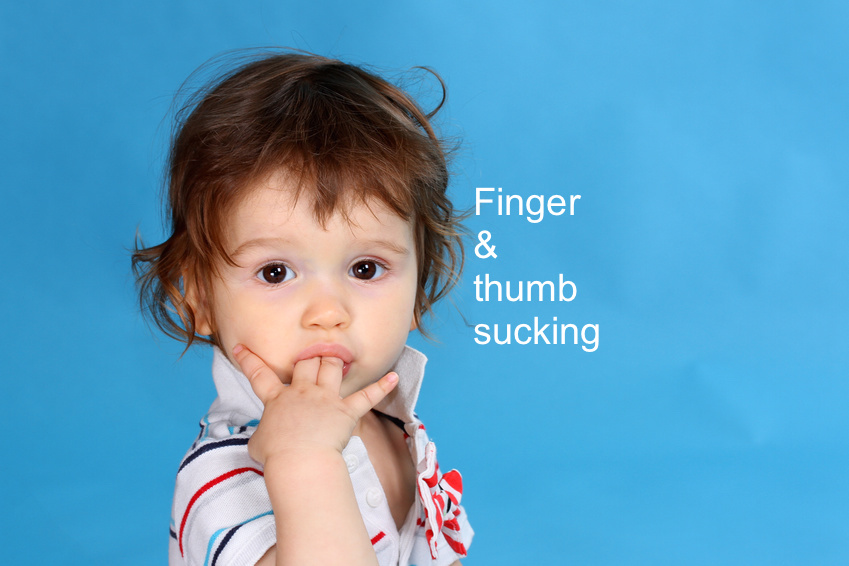
Sucking fingers or a thumb is a self-soothing strategy.

Before I became a parent I had this mental list of “my child will never…” One of those specifically was “my child will never suck their thumb.” I was really against it and thought it was a “bad habit” kids had.

Once Emily arrived she quickly refused the dummy and decided to suck her fingers instead. I guess technically it wasn’t her thumb!! At first I was really concerned as I had images of my beautiful little girl having horrendous bucked teeth.

Once learning more about infant sleep, I realised that finger and thumb sucking was in fact the perfect “self-settling tool” as the sucking sensation calms and soothes. It was something she could do for herself. Emily was an excellent sleeper and the finger sucking was only for sleep, not all through the day.

Fast forward and Emily is now 5. Recently we visited a dentist and we were told her front teeth were starting to move forward. She advised us that stopping this habit was best done prior to her permanent teeth coming though.

I was dreading tackling this issue because Emily was such a great sleeper and I didn’t want to mess with that, also I didn’t want her to be upset. I’m such a wimp!

So operation finger sucker began…

1)    Talk – In the lead up to preventing Emily from sucking her fingers during the night we talked a lot about why we needed to stop the habit. I showed her a couple of pictures of children on the Internet that had bucked teeth. This wasn’t to scare her but to help explain what we were trying to prevent.

2)    Reward – We talked about what we could do to reward her for not sucking her fingers. She decided she wanted to have earn a lolly every morning she didn’t suck her fingers. After 10 mornings, she wanted to go ten-pin bowling. Yep, I wouldn’t have picked that one!

3)    Begin small – For a fortnight before starting, Emily stopped sucking her fingers during story time. This was difficult but not impossible for her. Giving lots of praise was crucial.

4)    Tool – I decided Emily needed a tool to help her, as just asking her to not suck her fingers would be impossible plus I couldn’t watch her all through the night to check. I bought a “T-Guard™” which is basically a device that slips over the fingers (or thumb) to prevent suction. It is this suction that is comforting and pleasurable for children. It is the suction that pulls the teeth forward.

So with everything in place, we started “operation finger sucker”. I am shocked that Emily is doing so well. We are 5 nights into it and so far so good. Not being able to monitor everything that is going on is tricky, so I have to hope that it is working. I wish I had a video monitor!!

Emily is not thrilled about no longer sucking her fingers but she is settling really well at night and after a few early mornings, she is right on track. She is excited every morning to get a lolly in her bag plus a step closer to bowling. It is recommended she wear the guard for 45 nights so I guess we have a long way to go.

Sleep well.

Janelle Jeffery Child Sleep Consultant for Sleepytime Child Educator and Behaviour Specialist.
Janelle Jeffery
Child Sleep Consultant for Sleepytime.

When will my baby sleep through the night?

Mother with child 

How many times have you been asked, “So, is he sleeping through the night yet?” It seems that sleeping through the night is some kind of measure of success as a mother. If your baby isn’t sleeping through then what are YOU doing wrong? Cue all feelings of guilt and failure now…


What does sleeping through really mean?

Everyone seems to have his or her own interpretation of what sleeping through the night means. Some people say it’s 5 straight hours, others say 12hours. I believe, once a baby enters the cot at night, say around 7-8pm, and self-settles through the night (not needing help from mum or dad to fall back to sleep) and wakes any time after 6-7am, is sleeping through the night. As adults, we will wake up through the night from time to time when we are in the light phase of sleep. Babies need to wake too; it’s just that they are a little noisier about it. If your baby has managed to fall back to sleep independently then they are sleeping through!


So, what about feeding through the night? Babies need to be fed through the night. Some babies will drop the night feed as early as 3months old and some babies will still require a feed at 8months old. If your baby is waking through the night for one to two feeds but he can fall back to sleep all on his own after the feed AND he can settle himself other times during the night, then I believe he is sleeping through.


When should my baby be sleeping through?

All babies are different. As said earlier, some babies will drop all night feeds as early as 3months old and can resettle themselves without the help of mum or dad and will sleep 12hours straight. This is not the norm. Lots of babies (if everything goes to plan) will start sleeping through and not needing a feed at about 6months old. Some babies will take a little longer.

If your baby is waking frequently during night needing to be fed back to sleep, rocked, cuddled, bounced etc then maybe it is time to seek help. Good quality sleep is vital for healthy development. Asking for help isn’t a sign of failure as a parent.

Every baby is different and sometimes all you need is a little guidance and support from someone in the know. Book here to have a chat together. During this time we can discuss the needs of your child, the support I offer and how you can achieve sleep success in a caring and loving way!   Sleep well!

Janelle Jeffery Child Sleep Consultant for Sleepytime Child Educator and Behaviour Specialist.
Janelle Jeffery
Child Sleep Consultant for Sleepytime.

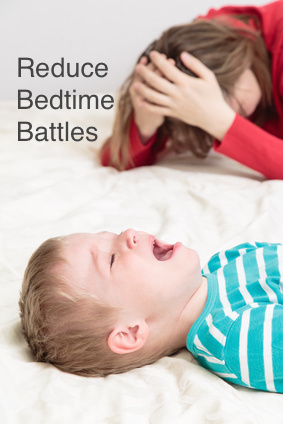
5 Top Tips To Reduce Bedtime Battles


The bedtime battle is exhausting

In an ideal world, bedtime would be the best time of the day where you get to share some special time with your child or children as they unwind and get ready for bed. You share stories about the day, read books, give lots of kisses and cuddles then they drift peacefully off to sleep.

Now in the real world, that seldom happens. As you merely mention the word “bath time” or “bedtime” world war three erupts. You throw them over your shoulder as you wrestle each other to the bathroom. As you try to rip their clothes off, they run away from you. You manage to catch their nose on the neckline and suddenly they are in tears and so are you. You give up on the bath, forgo story time, turn on the telly you all fall asleep on the couch through total exhaustion.

I remember a few years ago I would send myself to timeout, as I was afraid of what I would do if I stayed there any longer. YOU ARE NOT ALONE!! So, through my own personal experience, here are a few tips to help ease that bedtime battle…


Play before bath

After dinner is the best time to offer your child a time to play. When it is approximately 30-40minutes before lights out, this is the ideal time to start your bedtime routine. The routine starts with a bath or shower, and ends up in the bedroom with lights out. The bedtime routine is isolated in the bedroom and bathroom only as this becomes the cue that it is “sleepytime”.

Give a heads up

Approximately 5 minutes before the bedtime routine begins, give your child a warning that playtime is nearly over and bath time is about to begin. Imagine you are halfway through painting your nails and you are told to down tools and head to bed. I would say you would be pretty annoyed at being yanked away, plus you haven’t finished yet. Now imagine you get your nail varnish out and I say “you have 5minutes until bath time”. Now you have the choice to quickly paint your nails or choose something else less time consuming. You can even set a timer and once it goes off, it is time to stop playing.

Walk and talk

Once playtime is over, walk and talk. Say “I am heading to the bathroom, I will see you there.” This enables you to be out of the room before the negotiating or arguing starts. You can even make it fun. Tonight we are going to stomp like dinosaurs. Tonight we are going to fly like birds. This is making the transition fun and a slight extension of play.

Offer specific praise

Children love to please. They want to be recognised for doing good deeds. Offer praise and lots of it, BUT make sure the praise is specific to what they are doing. If your child stops playing and heads to the bathroom without a fuss, by saying “good boy” or “good girl” has no meaning to them. If you change it by saying “I liked how you came to the bathroom straight away” allows the child to understand exactly what behaviour pleases you. “I noticed you got into the bath quickly tonight.” Being clear is really important.

Be consistent

There will be some nights when your child will be a true angel and bedtime is a magical experience. There will be some nights when your child is over it and just wants to do what they want to do. Regardless, if you are 100% consistent with your evening routine, YOUR BATTLES WILL BE REDUCED immensely. If one night you are strict with the 5minute warning and the next you give in and agree to 5minutes more, you will inevitably create a bigger bedtime battle.

Children love routine and consistency even if at times they seem to want to resist it. After over a decade of working with children I know this is a definite fact. If you chop and change the rules, your child will be confused and you will pull your hair out.

All in all, bedtime should be a lovely part of your day. If you can keep it a positive and loving experience instead of a screaming match, you will begin to see the change pretty quickly. Every family goes through this bedtime battle from time to time so you are not alone.


Sleep well,

IMG_1856Janelle

Child Sleep Consultant for Sleepytime

Is it ok to leave your baby to cry?

Listening to your child cry can be difficult.

Crying is a sensitive subject and is often the topic of strong debate over social media amongst parents and professionals. I often avoid entering into it as I feel that the topic of crying is a multifaceted one and there is never the perfect answer.

I wanted to write about my personal experience with children who cry when they are learning to sleep independently. I am writing it to provoke thought and discussion, not to add fuel to the fire.

I am regularly asked by concerned parents, “do you use ‘cry-it-out’ methods?” This is a difficult question to answer because one person’s idea of CIO can be completely different to another person’s idea. My response is always this, “when you make changes to any child’s sleep habits there will always be some crying as the experience is different and unfamiliar to them. I use a variety of gentle techniques and will always work within your comfort level of crying.”

Asking parents to work within their own comfort level of crying is important but the main drive of this blog post is to explore not only how parents feel about crying, but also how the child feels about it. I will share with you two very different scenarios that happened recently.


Family 1 – Thomas was 15months old and he was taking a really long time to fall asleep at night. Mum and Dad were very comfortable with leaving Thomas to cry and would leave him for quite some time on his own until he finally fell asleep. Unfortunately after many months of leaving Thomas to cry, there was no reduction in the length it took for him to settle at night. Once I assessed Thomas’ sleep issues, I decided to not only amend his daytime nap to avoid overtiredness at bedtime, but I implemented a strategy where Thomas was offered regular reassurance from his parents as he was falling asleep. Leaving Thomas to cry was not necessarily wrong; it was just the wrong strategy for him.


Family 2- Henry was 8months old and he had many sleep associations that were hindering him becoming an independent sleeper. Henry’s parents were clear that they wanted a very slow and gentle process for him with minimal crying. Taking that on board, I wrote a sleep program where Henry would be offered lots of reassurance (like Thomas), and with very reduced periods of time where Henry was to be left alone to cry. What was interesting was that it became very clear early on that Henry became more upset and hysterical each time his parents tried to reassure him. Henry was telling his parents that he wanted to be left to figure it out for himself. This was a difficult situation for his parents but they soon realised it was important to attend to Henry’s needs the way he wanted it, not necessarily the way they wanted to give it. Once Henry was given some space to figure it out, he began sleeping independently.

Here I have presented two very different scenarios where parents had different comfort levels of crying. It is important to work within YOUR comfort level of crying, but it is essential to use a strategy that is right for your child. What works for one, may not work for another.

So if you are looking at helping your child to sleep independently, it is important that you not only choose a strategy that is perfect for your child, but find a sleep consultant who has a range of techniques because if you try to apply a ‘one size fits all’ approach like many books offer, it often doesn’t work and you end up with a distressed child and frazzled parents.


about-author


Janelle Jeffery

Child Sleep Consultant for Sleepytime