Tag Archives: sleep products

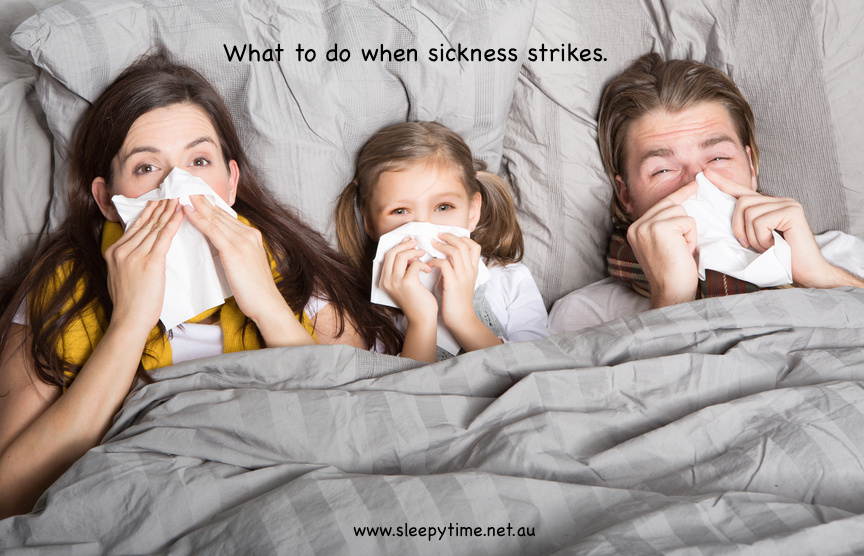
What to do when sickness strikes

A sick baby affects the whole family.
A sick baby affects the whole family


There have been some nasty bugs going around lately. Whether it is a cold, the flu, ear infection, gastro or anything else you can think of, when your little one is unwell, it can be difficult for the whole family. It can certainly be a shock to the system too if your baby, toddler or child WAS sleeping through the night and now they are frequently waking.

When ill, we all need as much rest as we can so our body can fight the infection.

Below are some tips to help you through the tough times.

  • Offer comfort. When your baby cries, go to them, they need you. Give them a kiss and a cuddle and give lots of reassurance.
  • Offer water. Keeping fluids up and remaining hydrated is important. Offering extra milk feeds at night should only be given if recommended by a physician. Feeding your baby back to sleep will make things harder once they are feeling better. Milk is not necessary.
  • Limit rocking and patting to sleep. If your baby isn’t used to you settling them this way, they may become more upset and confused. If you find this is the only way you can comfort your baby, then as soon as they are on the mend, stop.
  • Try not to bring your baby into bed with you – I find this one hard! A better option is to make a ‘make-shift’ bed in your baby’s room. They need their space to feel better.
  • Purchase a reliable thermometer so you can track their temperature.
  • Record the time when medication is administered. It can be hard to keep track in the middle of the night.
  • Use a “Vick’s Vapourizer” or “Medescan Rainbow Mist Humidifier”. Both work a little differently but they both can help with a snuffly nose or tickly chest. They are well worth the money.
  • When your baby rests, so do you. The last thing you need is for you to fall sick yourself so rest and re-cooperate whenever possible.

Health Direct Australia – 1800 002 222

If it isn’t an emergency, but you are wanting medical advice, calling Health Direct Australia is great because at first you will speak directly with a nurse and if she/he cannot advise you, you will be transferred to speak with a doctor.

After Hours GP

Chances are your baby will be ill over night when seeking medical treatment is limited. There are many after hour GP services that will come to your home during the night. Only drawback is that there is often a long wait time, but at least you are at home. Ask your local GP who they recommend so patient notes can be transferred.

Emergency

If it is an emergency, knowing where your child hospital is located, is crucial or phone 000.

Stay well and sleep tight!

Janelle Jeffery Child Sleep Consultant for Sleepytime
Janelle Jeffery
Child Sleep Consultant for Sleepytime


Contact me via email janelle@sleepytime.net.au or complete the online form to book in a time to chat about your little one’s sleep issues.


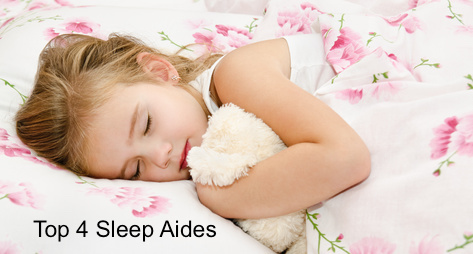
Top 4 Sleep Aides for Children

In my previous blog post, I wrote about 3 types of sleep gadgets to avoid that could actually prevent your child from sleeping soundly. If you didn’t read it, follow the link here.

Sleep aides can help promote sleep.

In this blog post I will share my top 4 sleep aides that can encourage your child to sleep a little better. With anything, I do like to keep things simple and I only introduce something if it is needed. Less is more when it comes to sleep.

1) Blackout blinds. A blackout blind or really thick curtains is a “must” in any child’s room. Darkness is needed for your body to produce melatonin. Melatonin is what makes you sleepy. With the summer months upon us, having a dark space to fall asleep at night BUT most importantly for morning, can help your child to sleep longer. Even the smallest peep of light in the wee hours can wake your child ready to start the day. Blinds can help with early risers.

2) Sleeping bags. I am a huge fan of sleeping bags for nights and naps, and they can be used from 3months of age right up to 3years. There are so many options available on the market allowing you to choose the perfect ‘tog’ (cloth weight) for your home environment. Every home will have a different room temperature so be guided by this. Sleeping bags help children to stay warm (not hot or cold) and snuggly though out the night. Sleeping bags are also recommended by SIDS and Kids. An added bonus is that sleeping bags can at times prevent children from climbing out of the cot.

3) A Sleeping Buddy. A small, soft, cuddly toy can help babies and children to wind down and fall to sleep. A sleeping buddy can help to resettle during the night or to extend a short nap. Children are tactile and need to feel, touch, smell and taste. Having a sleeping buddy can provide all of these. Many children do not bond with one because their sleeping buddy is a parent. Some children just do not want anything to sleep with and that is ok. Some children may not have a sleeping buddy until 3years or older. A sleeping buddy can help older children when they are feeling scared in the night. Introducing a soft toy into a cot or bed needs to be at the discretion of the parent as it can increase the risk of SIDS.

4) A Sleep Clock. If used consistently, a sleep clock can help children know when they need to stay in bed and when it is time to get out of bed in the morning. Children are governed by their internal clock and do not know when it is time to get up or not. A child doesn’t know the difference between 5am and 7am. A sleep clock is a visual clue and can take some pressure off you as it’s the sleep clock that says “stay in bed” and not you being the bad guy. A sleep clock will only work if you stick with the time. If you allow your child to get up even 5mins before the clock says it’s time to get up, you are opening the opportunity for an earlier and earlier start.

With any sort of sleep aide, they are only there to enhance the opportunity for sleep. Sleep aides may not make your child sleep longer and they cannot stop your child from waking up through the night. Sleep is a complex issue. If you would like more advice, then book in a time to chat here.

**If you wish to support an Australia online baby store visit Dream Child Emporium to purchase your sleep products.

Sleep well.

Janelle Jeffery Child Sleep Consultant for Sleepytime Child Educator and Behaviour Specialist.
Janelle Jeffery
Child Sleep Consultant for Sleepytime.


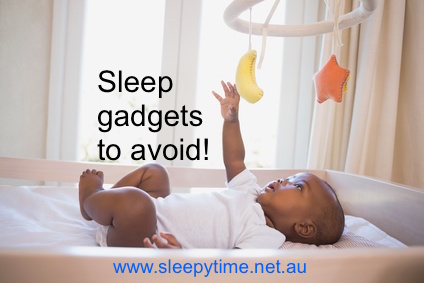
Baby sleep gadgets to avoid!

Sleep Gadgets to Avoid!

There is an endless stream of gizmos and gadgets on the market that promise to help your baby sleep. To be honest I have bought a few dud things that seemed like a great idea at the time. Here are a few gadgets to avoid as they can actually prevent your baby from sleeping well.

1 – Hanging mobiles. They look beautiful in a nursery. In fact they can be very useful – but not for sleep. As parents we think, “oh it would be so nice to watch it go around and around then fall asleep”. Well the opposite can happen. Mobiles stimulate your baby’s brain ready for play instead of winding down ready for sleep. Mobiles are wonderful hanging over the change table when you need to distract and entertain your baby whilst you have your hands full.

2) Flashing Lights. Electric aquariums or twinkling star shows, night lights with rotating colours can actually keep your baby awake. You want the room to be ‘’boring” and dark to promote good sleep.

3) Music machines. I am talking about anything that plays a song. Music has rises and falls and this could actually wake your baby when they are trying to drift off to sleep. If your baby has fallen asleep with music playing and the CD has stopped, they may wake wondering where the noise has gone. If you need anything at all, ‘white noise’ is a better choice as it is constant and unchanging.

If you have fallen into the trap of the bedtime circus, it is time to remove everything and get back to basics. The best ways to help your baby sleep are:

1               Routines

2               Sleep Cues

3               The opportunity to sleep independently

Easier said than done right? My philosophy around bedtime and ‘sleep devices’ is – keep it simple! If your baby is having difficulty sleeping, buying a gadget or gizmo will only put a bandaid on the problem and not tackle the root of the issue.

If you want your baby to sleep unassisted but feel confused or worried about where or how to start, I am here to help!!! Contact me here.

If you’re looking at what sleep products I do recommend, read more here.

Janelle Jeffery Child Sleep Consultant for Sleepytime Child Educator and Behaviour Specialist.
Janelle Jeffery
Child Sleep Consultant for Sleepytime
Child Educator and Behaviour Specialist.


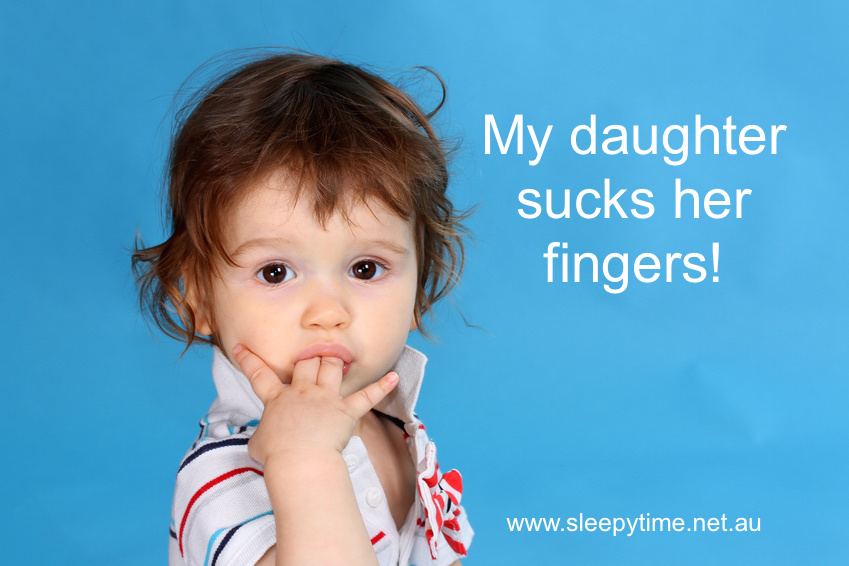
My daughter sucks her fingers!


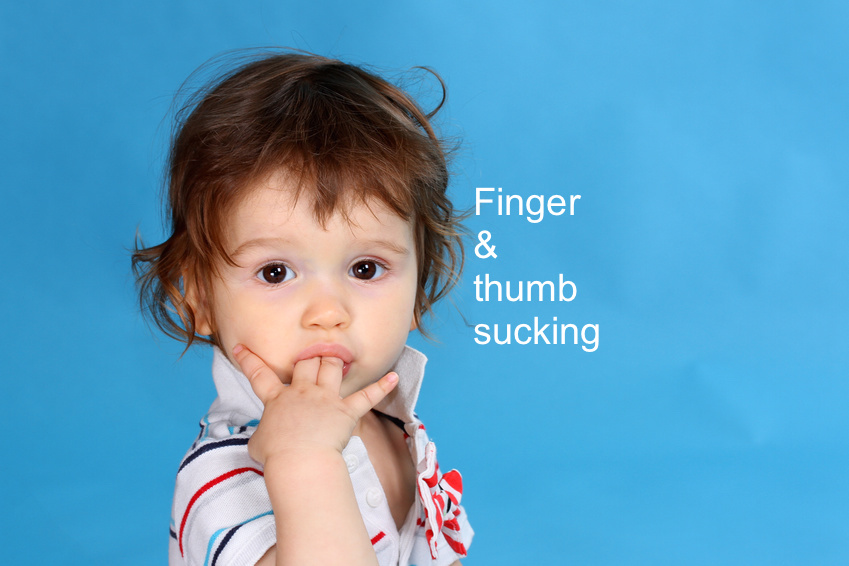
Sucking fingers or a thumb is a self-soothing strategy.

Before I became a parent I had this mental list of “my child will never…” One of those specifically was “my child will never suck their thumb.” I was really against it and thought it was a “bad habit” kids had.

Once Emily arrived she quickly refused the dummy and decided to suck her fingers instead. I guess technically it wasn’t her thumb!! At first I was really concerned as I had images of my beautiful little girl having horrendous bucked teeth.

Once learning more about infant sleep, I realised that finger and thumb sucking was in fact the perfect “self-settling tool” as the sucking sensation calms and soothes. It was something she could do for herself. Emily was an excellent sleeper and the finger sucking was only for sleep, not all through the day.

Fast forward and Emily is now 5. Recently we visited a dentist and we were told her front teeth were starting to move forward. She advised us that stopping this habit was best done prior to her permanent teeth coming though.

I was dreading tackling this issue because Emily was such a great sleeper and I didn’t want to mess with that, also I didn’t want her to be upset. I’m such a wimp!

So operation finger sucker began…

1)    Talk – In the lead up to preventing Emily from sucking her fingers during the night we talked a lot about why we needed to stop the habit. I showed her a couple of pictures of children on the Internet that had bucked teeth. This wasn’t to scare her but to help explain what we were trying to prevent.

2)    Reward – We talked about what we could do to reward her for not sucking her fingers. She decided she wanted to have earn a lolly every morning she didn’t suck her fingers. After 10 mornings, she wanted to go ten-pin bowling. Yep, I wouldn’t have picked that one!

3)    Begin small – For a fortnight before starting, Emily stopped sucking her fingers during story time. This was difficult but not impossible for her. Giving lots of praise was crucial.

4)    Tool – I decided Emily needed a tool to help her, as just asking her to not suck her fingers would be impossible plus I couldn’t watch her all through the night to check. I bought a “T-Guard™” which is basically a device that slips over the fingers (or thumb) to prevent suction. It is this suction that is comforting and pleasurable for children. It is the suction that pulls the teeth forward.

So with everything in place, we started “operation finger sucker”. I am shocked that Emily is doing so well. We are 5 nights into it and so far so good. Not being able to monitor everything that is going on is tricky, so I have to hope that it is working. I wish I had a video monitor!!

Emily is not thrilled about no longer sucking her fingers but she is settling really well at night and after a few early mornings, she is right on track. She is excited every morning to get a lolly in her bag plus a step closer to bowling. It is recommended she wear the guard for 45 nights so I guess we have a long way to go.

Sleep well.

Janelle Jeffery Child Sleep Consultant for Sleepytime Child Educator and Behaviour Specialist.
Janelle Jeffery
Child Sleep Consultant for Sleepytime.

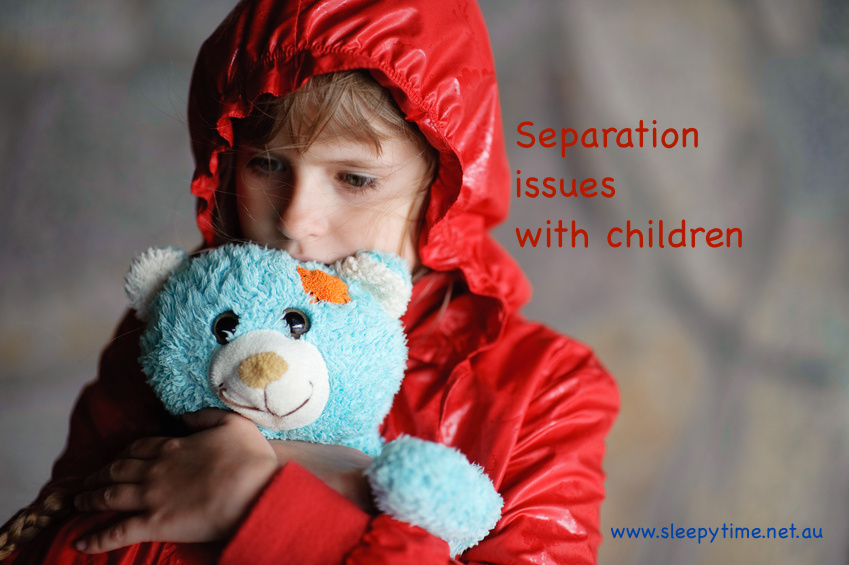
Does your child have difficulty separating from you?

Some children find separation very difficult.
Some children find separating from parents very difficult.

Do you have a child (2.5years and over) who is having a difficult time separating from you? There can be many different reasons why your child is feeling this way such as:

  • Change in living arrangements – a new bedroom, a new house or parent’s separating
  • Death of a loved one
  • Distance from parents due to the birth of a sibling
  • Separation due to parent/s work commitments especially fly-in-fly-out or interstate/overseas travel
  • Starting at a new day-care, kindergarten, or school
  • Is a sensitive soul or may just be a little more anxious than usual

Even if the reason your child having difficulty separating from you is not listed above, all children young and old need to know that their loved ones are close by. Many children will go through periods of being extra clingy. My daughter who is 5 is finding it really difficult leaving me in the morning at school. She has never been this way before. She attended day-care since she was 8months, and last year at kindergarten, it wasn’t really a problem. Now it is.

For some children separating from parents during the day is fine but when it comes to bedtime, they want you to start sleeping with them and for you not to leave them there alone. This is all normal and typical child behaviour but what I advocate is to try to reduce the stress and anxiety your child feels and for you to explain what is happening using ‘child-friendly’ language.

Though it is important to recognise what is happening with your child and attend to their needs so they feel loved and safe, it is crucial parents do not make the situation worse by making it bigger than it needs to be. Children are sensitive and they can pick up on our own feelings as much as we think we are good at hiding them. If we are tense and worried when it is time to say ‘goodbye’ then our children will sense that too.

If your child has trouble separating at night it is helpful to have a very special cuddly sleepy toy. Care-Bears are “old school” but excellent sleeping companions for older children. When you leave your child at night, come back and check in on them as they are falling asleep. Start with a 2minute check, then a 5minute check, then a 10minute check. By the time you do the final check, they should be asleep.

Care Bears are great companions for children.

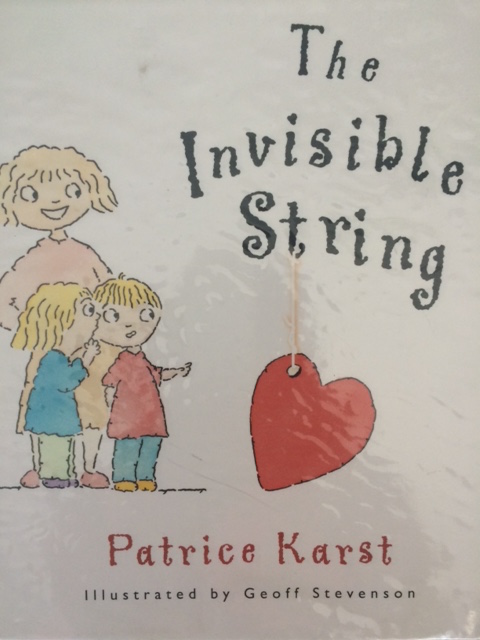
Through my many years of teaching children, I find reading picture books a fantastic way to chat to them about what is happening in their world. The best book I have read and completely recommend is, “The Invisible String” written by Patrice Karst. This beautiful book is about helping adults and children understand that we are all connected and we are never truly alone. The aim of this book is to help alleviate your child’s fears from being apart from you and for your child to know they are truly loved no matter where in the world you are.

The Invisible String by Patrice Karst

Another way to help with separation is through distraction. If you are dropping your child off somewhere, it is best to get the ‘goodbyes’ over with pretty quickly. When their teacher or caregiver etc receives your child, they are best to distract your little one by getting them engaged with something fun immediately. This is the best time for you to go. If you hover around, the separation will become worse. Typically most children settle really quickly once you are gone. Know that if there is any further distress, the caregiver will call and let you know. It is important you have a great relationship with all the people in your child’s world.

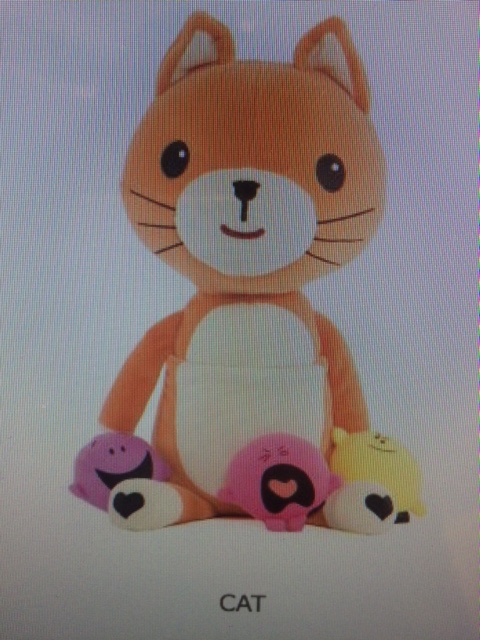
Allowing your child the opportunity to express how they are feeling is a great way to not only connect with you, but to connect to their own thoughts and feelings. Often the route cause of tantrums is due to feelings they need to express. I have found “Kimochis” toys are a wonderful way to assist children with this. These soft toys come with “feelings characters” and help children identify what they are feeling at the time. Another way is to make a “feelings” chart with ‘feeling faces’ as this can be a reference point for your child.

Kimochis are toys that help children express their feelings.

If you have a child that is having difficulty separating from you, first of all, do not feel alone in this. All children go through this at some stage. If you can identify why they are feeling this way, then try to reduce their worry by implementing the suggestions in this post.

If you find night-time separation a real battle, then book in a chat together here.

Sleep well,

Janelle