Tag Archives: baby sleep

Sleep Training Series – The Extinction Method Explained

With this series of blog posts, I will be giving a brief background on a specific method of sleep training and share some pros and cons of each. My aim is to educate and inform, not to throw criticism towards any parent who may choose a specific method. I just want to be clear that there are many forms of sleep training methods, many that I won’t be covering, so you need to choose the best strategy for your specific child.

This method isn't for the faint hearted.
This method isn’t for the faint hearted.

What is the Extinction Method?

The Extinction Method, often regarded by sleep professionals as the “cry-it-out” method, because in a nutshell, a baby is left to cry themselves to sleep with no interaction or reassurance by the parent.

American paediatrician, Dr Marc Weissbluth, author of “Healthy Sleep Habits” is the biggest advocate for this type of sleep training. Interestingly this method is popular with paediatricians and doctors because it is often the only method familiar to them.

What does the Extinction Method aim to achieve?

The goal is for your baby to fall asleep independently, without any help from an adult, at anytime. It eliminates any negative sleep associations like rocking, feeding to sleep, dummy/pacifier, cuddling to sleep etc very quickly.

So how does the Extinction Method work?

First of all, preparation is key. Make sure your baby…

  1. Isn’t overtired.
  2. Is well.
  3. Has a cool, dark, quiet place to sleep.
  4. Has a bedtime routine.

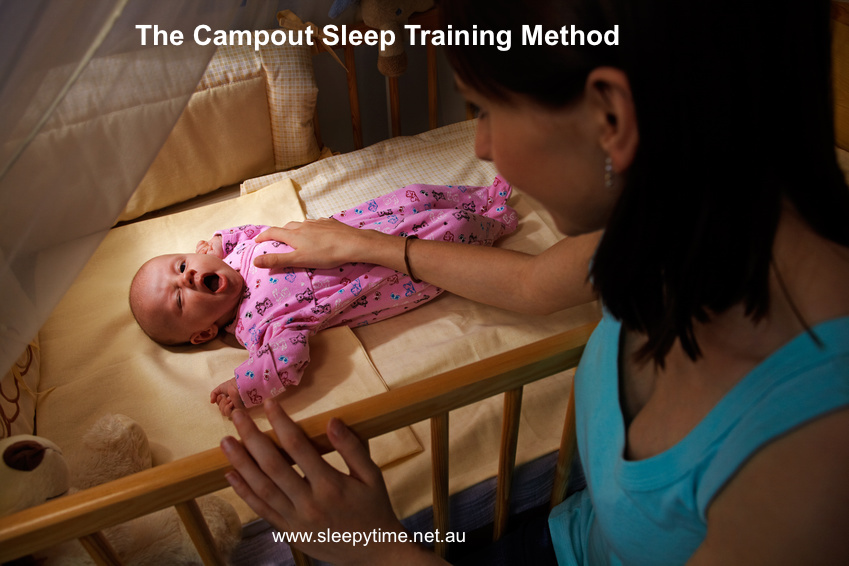
After the bedtime routine, you place your baby into the cot – AWAKE. The next step is to leave the room and never some back until morning time.

This method suggests that if you do come back into the room at anytime, your baby will become more distressed or stimulated and learn that if they cry, you will come and rescue them. These visits will encourage excessive, prolonged crying.

Cons of the Extinction Method

  • This sleep training method is the most extreme and controversial. It isn’t for the faint-hearted.
  • This method can be very distressing for the baby and the parents because there is no form of comfort or reassurance permitted.
  • This method doesn’t allow for mishaps like a dirty nappy, vomiting or being stuck in the cot rails. It is not recommended for a baby who needs to continue to feed during the night.
  • This method is not suitable for children in a bed because it is very likely your child will follow you out of the room.

Pros of the Extinction Method

  • Some babies and children want “all or nothing” meaning if you are not going to feed, rock, let me have a dummy etc then I want to be left alone thank you very much!! Any sort of gentle or medium sort of comfort can be more unsettling for some children so this method is often the last resort.
  • It can be very quick. Some parents claim that their baby is sleeping through the night after 2-3nights of implementation.

Final thoughts from me…

Before deciding to use this method, I recommend starting with a more gentle approach then moving towards the Extinction Method if that strategy isn’t working.

I do not recommend using this method for babies who need to continue to have feeds during the night as this can lead to feeding issues and weight complications. If unsure, speak to your doctor or health nurse professional first.

When choosing a method of sleep training it is important to remember that the approach is only one piece of the puzzle. Finding the cause of the difficult sleep comes first. Next you need to establish positive sleep cues for your baby. Lastly comes the sleep training method. With any sleep training method, it is really important to listen to your baby. When families work with me, quite often the method changes and evolves depending on how the baby is coping and the signs he is giving me.

Other forms of sleep training methods that will be covered in this 4part series are: The Extinction Method, The Ferber Method, The Camp Out Method and The No Cry Method.

Janelle Jeffery Child Sleep Consultant for Sleepytime
Janelle Jeffery
Child Sleep Consultant for Sleepytime



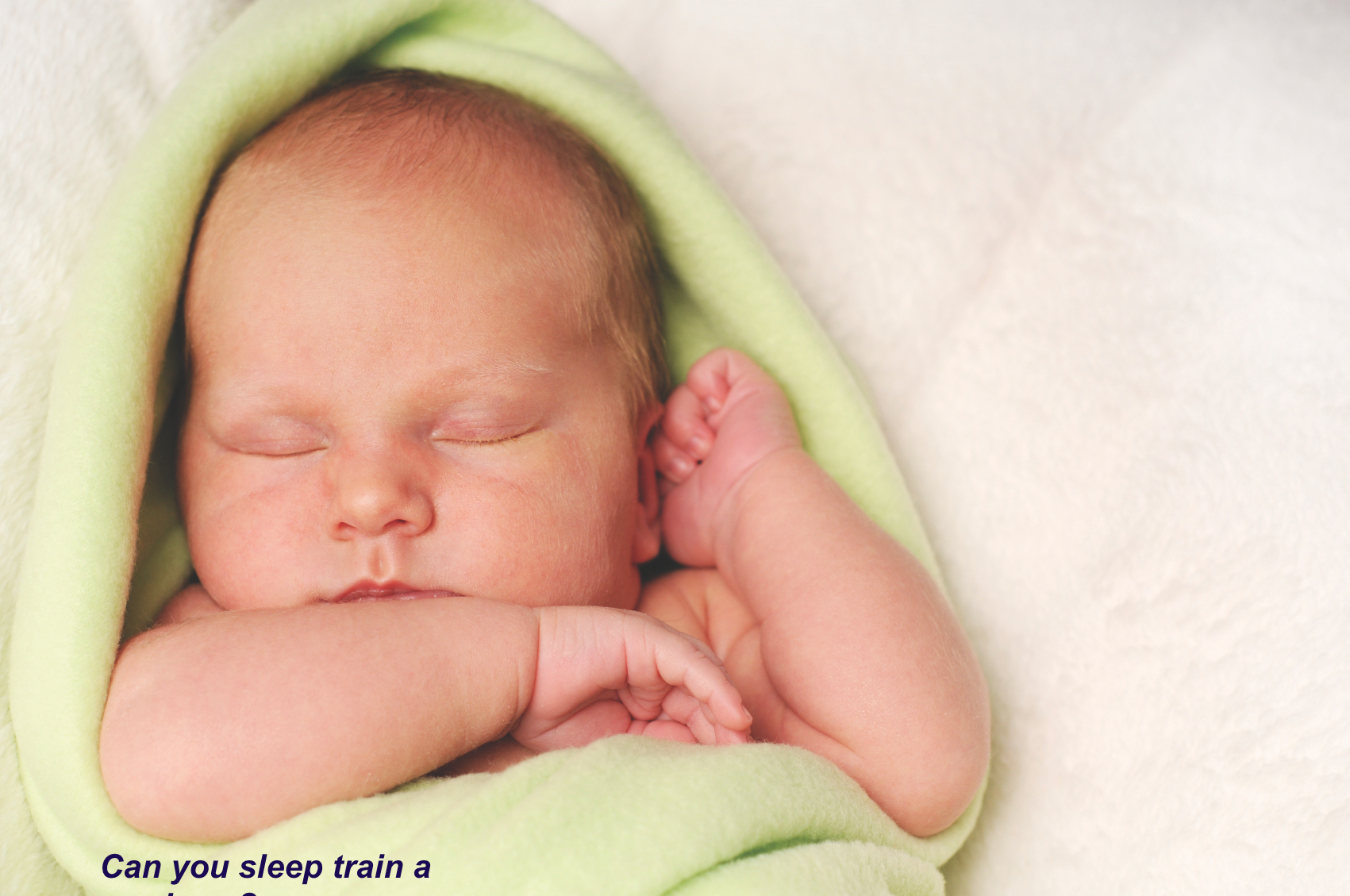
Can you sleep train a newborn?

Newborn sleep - what can you do to help right now?

Portrait of a sleeping nine day old newborn baby girl. She is sleeping in a small wooden crate, curled up and swaddled with turquoise blue knit material.

Parents often want to know when they can begin establishing healthy sleep habits. It really does pose the question – can you sleep train a newborn? So, you understand the importance of sleep but there is this “fear” that you will create really bad sleep habits for your baby. What should you do?

Firstly I want to clearly state my position regarding sleep training a newborn… I believe you cannot “sleep train” a newborn baby. After 12weeks, there are different techniques and methods more suited for younger babies you can begin to try if you are finding sleep difficult. Science dictates that the sleep cycle of a newborn differs greatly from the sleep cycle of a baby over 6months of age.

So what does this mean? You cannot do anything until 6months? No, in fact you can do lots of things in the interim to help your baby BEGIN to establish healthy sleep habits. Here are some things you can do from the moment you arrive home from the hospital.

1) Establish a bedtime routine.

Yep, starting a defined bedtime routine gives you and your baby a clear line between nighttime and daytime sleep. Incorporating a bath, a massage, a book or song before bed will become an important ‘sleep cue.’

2) Establish “good feeding.”

Make sure your baby is feeding properly. Is your baby latching correctly? Many babies are born with upper/lower lip-ties that make feeding difficult. A hungry baby will not sleep! If your baby has reflux, you may need to offer smaller feeds more often to prevent over-feeding causing discomfort. See a lactation consultant if you are finding feeding difficult.

3) Positive Sleep Environment.

When at home, try your best to allow your baby to sleep in a quiet room, in a bassinet or cot. This will encourage a better daytime sleep and it will help with nighttime sleeping too. If your baby is always in the sling napping during the day, it will be harder for them to sleep without it at night.

4) Understand your baby’s tired signs.

Newborns can roughly stay awake for about 45mins at a time. This means that by the time your baby has woken; you need to change the nappy, feed, burp and bond all in 45mins. It isn’t long before your baby is ready to sleep again. Really watch the clock AND your baby’s tired signs. An overtired baby will need a lot of ‘help’ to fall asleep or your baby may catnap instead.

5) Helping your baby to fall asleep.

Some babies need a lot of help to fall asleep, some babies need no help at all. Rocking, patting, cuddling to sleep are all great tools for newborns. There are no set rules around newborn sleep but keep in the forefront of your mind that as each week clocks on, you want to help your baby less and less to fall asleep initially and less help to resettle.

Having a newborn baby in the house can be stressful and demanding – but it is also such a special time that goes by far too quickly. This time is about bonding, feeding and sleeping for everyone involved!

To read more about newborn sleep, click here

Sleep Well,

Janelle Jeffery Child Sleep Consultant for Sleepytime
Janelle Jeffery
Child Sleep Consultant for Sleepytime



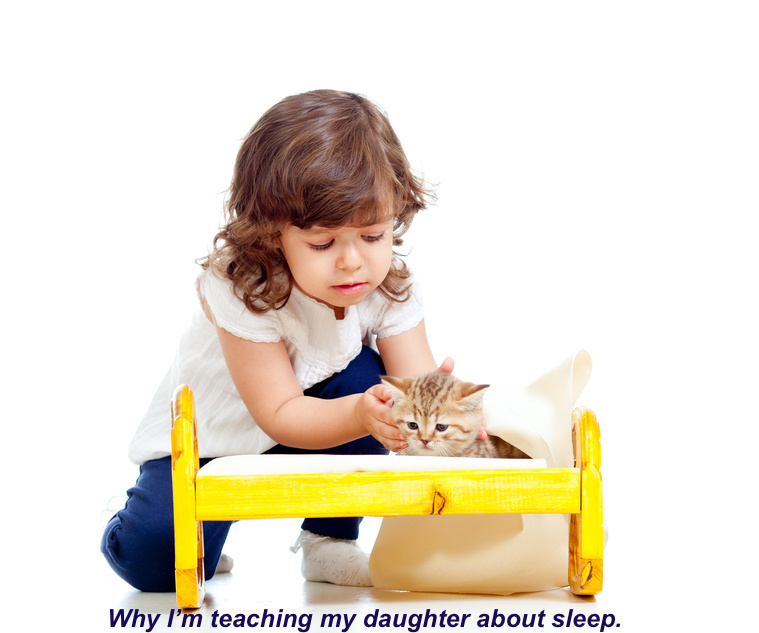
Why I’m teaching my daughter about sleep

Being a child sleep consultant there is a lot of talk at the dinner table around what I do, so you would be right to think that my daughter Emily is and has always been, a perfect sleeper. Well that just isn’t the case.

In fact I still have this image burnt in my brain of Emily (3 at the time) standing in the bathroom half undressed, tantrum in full swing, and me on my bed crying having a time out. I hated the lead up to bedtime, and so did she. Every night the battle was on. We were both left with wounds even though the end result was her finally falling asleep. No one walked away a winner.

It was getting so horrendous that after dinner, I would pounce on her kicking and screaming (that was both of us!!) whilst trying to navigate the stairs to the bathroom to rip the clothes off her tiny body. Boy she was strong. I would talk to Emily through gritted teeth and basically threaten her that I would send her to bed without a story or a kiss or even pyjamas. She would need to sleep naked! Bedtime was a punishment for both of us.

Hindsight and knowledge are wonderful things because once we finally passed that phase (not quite sure how I did it to be honest as there was a lot of wine consumed during that period) I realised that I needed to teach my daughter about sleep. Sleep should not be a punishment but a lovely reward after a busy day. I looked at sleep that way so why couldn’t she?

How to teach your child about sleep

#1 Tired signs

If your child is getting ratty, being naughty or is having a tantrum AND it is close to a sleep time, tell him “your body is telling me that you are getting tired. I get frustrated/angry/upset/etc when I am tired too.” No child likes to hear, “you are tired.” By commenting on what his body is telling him, takes it away from being a personal attack. It is not his fault he is behaving that way – he’s tired. By telling him that you feel like that too helps him understand that it is normal. This also enables him to begin to recognise the signs of being tired. I love it when Emily says to me “I am tired mummy, I think I need to go to bed.”

#2 No surprises

The element of surprise will only backfire at bedtime. Imagine you are watching your favourite show and your partner switches off the TV and sends you to bed. You would be mighty angry! Children need to be warned that playtime is at an end and bedtime is approaching. Set a timer for 5minutes and once it’s time, playtime is done.

Stick to the same bedtime routine each and every night. A bedtime routine’s job is to send a message to our body that is it time for sleep. If there is no consistent routine, then your child is missing out on that vital sleep cue.

#3 Communication

Talk through the bedtime routine. Some children need step-by-step guidance. These can be one word prompts like “toilet, clothes off, bath, teeth, pyjamas, etc.” There is a lot of research out there stating boys process information differently to girls. If you overload your son with long, wordy instructions, you are likely to hit resistance. Less talk more action applies here. You can download a visual bedtime chart here or make your own.

Explain to your child (not when they are having a meltdown!) why sleep is so important. Make it simple and explain it in a way that is age appropriate.

Sleep is Awesome because…

  • Sleep makes our hearts happy.
  • Sleeps helps us to grow.
  • Sleep helps our body to fight germs.
  • Sleep helps us to balance and not fall over.
  • Sleep gives our brain power to think.
  • Sleep gives us energy to play and have fun.

#4 Punishment

As soon as you make bedtime a punishment, you are always going to be faced with a battle. Sending a child to bed after explaining they are showing their “tired signs” is one thing, but sending them to bed for hurting their sister is the wrong message you want to be giving. If you do need to offer a “timeout” I would recommend using a different room in the house.

So, in a nutshell…

  • Change your mindset around sleep.
  • Teach your child about tired signs.
  • Teach your child about the benefits of sleep.
  • Follow a consistent bedtime routine. (Download chart)
  • Contact me here for a professional, holistic approach to change bedtime battles at your house.
Janelle Jeffery Child Sleep Consultant for Sleepytime
Janelle Jeffery
Child Sleep Consultant for Sleepytime

 

What to do when sickness strikes

A sick baby affects the whole family.
A sick baby affects the whole family


There have been some nasty bugs going around lately. Whether it is a cold, the flu, ear infection, gastro or anything else you can think of, when your little one is unwell, it can be difficult for the whole family. It can certainly be a shock to the system too if your baby, toddler or child WAS sleeping through the night and now they are frequently waking.

When ill, we all need as much rest as we can so our body can fight the infection.

Below are some tips to help you through the tough times.

  • Offer comfort. When your baby cries, go to them, they need you. Give them a kiss and a cuddle and give lots of reassurance.
  • Offer water. Keeping fluids up and remaining hydrated is important. Offering extra milk feeds at night should only be given if recommended by a physician. Feeding your baby back to sleep will make things harder once they are feeling better. Milk is not necessary.
  • Limit rocking and patting to sleep. If your baby isn’t used to you settling them this way, they may become more upset and confused. If you find this is the only way you can comfort your baby, then as soon as they are on the mend, stop.
  • Try not to bring your baby into bed with you – I find this one hard! A better option is to make a ‘make-shift’ bed in your baby’s room. They need their space to feel better.
  • Purchase a reliable thermometer so you can track their temperature.
  • Record the time when medication is administered. It can be hard to keep track in the middle of the night.
  • Use a “Vick’s Vapourizer” or “Medescan Rainbow Mist Humidifier”. Both work a little differently but they both can help with a snuffly nose or tickly chest. They are well worth the money.
  • When your baby rests, so do you. The last thing you need is for you to fall sick yourself so rest and re-cooperate whenever possible.

Health Direct Australia – 1800 002 222

If it isn’t an emergency, but you are wanting medical advice, calling Health Direct Australia is great because at first you will speak directly with a nurse and if she/he cannot advise you, you will be transferred to speak with a doctor.

After Hours GP

Chances are your baby will be ill over night when seeking medical treatment is limited. There are many after hour GP services that will come to your home during the night. Only drawback is that there is often a long wait time, but at least you are at home. Ask your local GP who they recommend so patient notes can be transferred.

Emergency

If it is an emergency, knowing where your child hospital is located, is crucial or phone 000.

Stay well and sleep tight!

Janelle Jeffery Child Sleep Consultant for Sleepytime
Janelle Jeffery
Child Sleep Consultant for Sleepytime


Contact me via email janelle@sleepytime.net.au or complete the online form to book in a time to chat about your little one’s sleep issues.