Category Archives: Crying

Crying related topics

Sleep Training Series – The Extinction Method Explained

With this series of blog posts, I will be giving a brief background on a specific method of sleep training and share some pros and cons of each. My aim is to educate and inform, not to throw criticism towards any parent who may choose a specific method. I just want to be clear that there are many forms of sleep training methods, many that I won’t be covering, so you need to choose the best strategy for your specific child.

This method isn't for the faint hearted.
This method isn’t for the faint hearted.

What is the Extinction Method?

The Extinction Method, often regarded by sleep professionals as the “cry-it-out” method, because in a nutshell, a baby is left to cry themselves to sleep with no interaction or reassurance by the parent.

American paediatrician, Dr Marc Weissbluth, author of “Healthy Sleep Habits” is the biggest advocate for this type of sleep training. Interestingly this method is popular with paediatricians and doctors because it is often the only method familiar to them.

What does the Extinction Method aim to achieve?

The goal is for your baby to fall asleep independently, without any help from an adult, at anytime. It eliminates any negative sleep associations like rocking, feeding to sleep, dummy/pacifier, cuddling to sleep etc very quickly.

So how does the Extinction Method work?

First of all, preparation is key. Make sure your baby…

  1. Isn’t overtired.
  2. Is well.
  3. Has a cool, dark, quiet place to sleep.
  4. Has a bedtime routine.

After the bedtime routine, you place your baby into the cot – AWAKE. The next step is to leave the room and never some back until morning time.

This method suggests that if you do come back into the room at anytime, your baby will become more distressed or stimulated and learn that if they cry, you will come and rescue them. These visits will encourage excessive, prolonged crying.

Cons of the Extinction Method

  • This sleep training method is the most extreme and controversial. It isn’t for the faint-hearted.
  • This method can be very distressing for the baby and the parents because there is no form of comfort or reassurance permitted.
  • This method doesn’t allow for mishaps like a dirty nappy, vomiting or being stuck in the cot rails. It is not recommended for a baby who needs to continue to feed during the night.
  • This method is not suitable for children in a bed because it is very likely your child will follow you out of the room.

Pros of the Extinction Method

  • Some babies and children want “all or nothing” meaning if you are not going to feed, rock, let me have a dummy etc then I want to be left alone thank you very much!! Any sort of gentle or medium sort of comfort can be more unsettling for some children so this method is often the last resort.
  • It can be very quick. Some parents claim that their baby is sleeping through the night after 2-3nights of implementation.

Final thoughts from me…

Before deciding to use this method, I recommend starting with a more gentle approach then moving towards the Extinction Method if that strategy isn’t working.

I do not recommend using this method for babies who need to continue to have feeds during the night as this can lead to feeding issues and weight complications. If unsure, speak to your doctor or health nurse professional first.

When choosing a method of sleep training it is important to remember that the approach is only one piece of the puzzle. Finding the cause of the difficult sleep comes first. Next you need to establish positive sleep cues for your baby. Lastly comes the sleep training method. With any sleep training method, it is really important to listen to your baby. When families work with me, quite often the method changes and evolves depending on how the baby is coping and the signs he is giving me.

Other forms of sleep training methods that will be covered in this 4part series are: The Extinction Method, The Ferber Method, The Camp Out Method and The No Cry Method.

Janelle Jeffery Child Sleep Consultant for Sleepytime
Janelle Jeffery
Child Sleep Consultant for Sleepytime
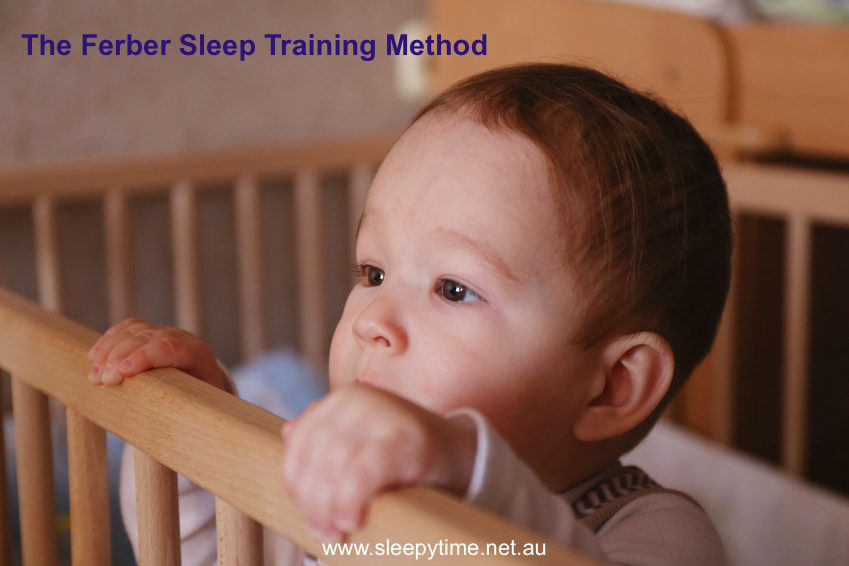


Sleep Training Series – The Ferber Method Explained

With this series of blog posts, I will be giving a brief background on a specific method of sleep training and share some pros and cons of each. My aim is to educate and inform, not to throw criticism towards any parent who may choose a specific method. I just want to be clear that there are many forms of sleep training methods (some I don’t be covering) and you need to choose the best strategy for your specific child.


The Ferber Method can be adaptable to your family situation.
The Ferber Method can be adapted to your family situation.

What is the Ferber Method?

Dr Richard Ferber, director or The Centre for Pediatric Sleep Disorders in Boston wrote a book called “Solve Your Child’s Sleep Problems” in 1985 but the book was updated and revised in 2006. What is interesting is that there have been quite a few modifications and versions to this type of method.

Some people class Richard’s “Ferberization” as a “cry-it-out” sleep training method. The Ferber method, or variations of this method, can also be called “Controlled Crying,” “Timed checks,” “Progressive Waiting”, or “Leave and Check.”

What does the Ferber Method aim to achieve?

The goal is for your baby to fall asleep independently, with little or intermediate parent intervention that is faded out over a period of time. It eliminates any negative sleep associations like rocking, feeding to sleep, dummy/pacifier, cuddling to sleep etc.

So how does the Ferber Method work?

First of all, preparation is key. Make sure your baby…

  1. Isn’t overtired.
  2. Is well.
  3. Has a cool, dark, quiet place to sleep.
  4. Has a bedtime routine.
  5. Has a sleep phrase introduced.

Like I mentioned earlier, there are many adaptations to this method, making it somewhat more flexible. In a nutshell, you place your baby into the cot, awake as possible, and leave the room. You set a time to check back on your baby. You re-enter the room, say a sleep phrase, you may or may not offer some touch or a cuddle, you leave the room again for a set time. The timed intervals gradually increase either between each actual check or each new night.

The Ferber Method advocates no physical touch and checks at very specific set timed intervals. Other adaptations are slightly different in the actual timing of the checks and whether touch is to be offered or not. Ideally if physical touch is offered, it is eventually faded out. Another thing to note is that you can continue to room share with your baby (not co-sleep) if you wish.

This method can take between 1-3weeks for your baby to be able to sleep independently depending on the variation you decide upon.

Cons of The Ferber Method

  • There can be a lot of crying if your baby becomes distressed with the constant coming and going.
  • The re-entering of the room may wake your baby as they initially drift off.
  • It takes longer to see progress than the Extinction Method.
  • The timed intervals can become confusing for parents especially in the middle of the night.
  • This method isn’t helpful for children already in a bed as you will find your child will follow you out of the room.

Pros of The Ferber Method

  • You can continue to room share.
  • You can continue to night-feed.
  • You are able to offer physical and verbal comfort.
  • It is a slower process but it is more of a gentle, intermediate approach to change.
  • The crying will eventually reduce.
  • This method works well if you have more than one child at home.
  • You may see progress quicker than other methods of sleep training.

Final thoughts from me…

If you offer gentle touch or visit often AND can clearly see that your presence is making it harder on your baby, then you may need to increase the time between checks or choose a different method.

When choosing a method of sleep training it is important to remember that the approach is only one piece of the puzzle. Finding the cause of the difficult sleep comes first. Next you need to establish positive sleep cues for your baby. Lastly comes the sleep training method. With any sleep training method, it is really important to listen to your baby. When families work with me, quite often the method changes and evolves depending on how the baby is coping and the signs he is giving me.

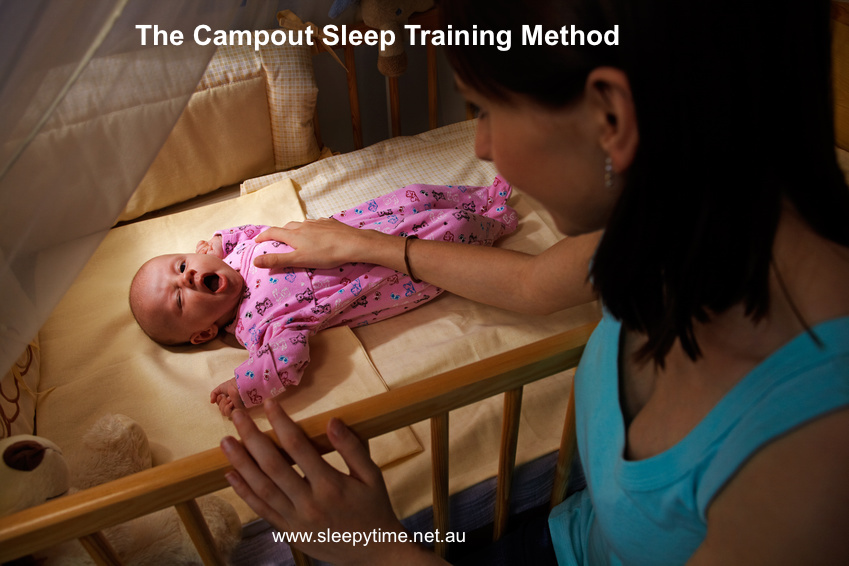
Other forms of sleep training methods that will be covered in this 4part series are: The Extinction Method, The Ferber Method, The Camp Out Method and the No Cry Method.


Janelle Jeffery Child Sleep Consultant for Sleepytime
Janelle Jeffery
Child Sleep Consultant for Sleepytime
 

Sleep Training Series – The No Cry Method Explained

With this series of blog posts, I will be giving a brief background on a specific method of sleep training and share some pros and cons of each. My aim is to educate and inform, not to throw criticism towards any parent who may choose a specific method. I just want to be clear that there are many forms of sleep training methods (many I won’t be covering) so you need to choose the best strategy for your specific child.


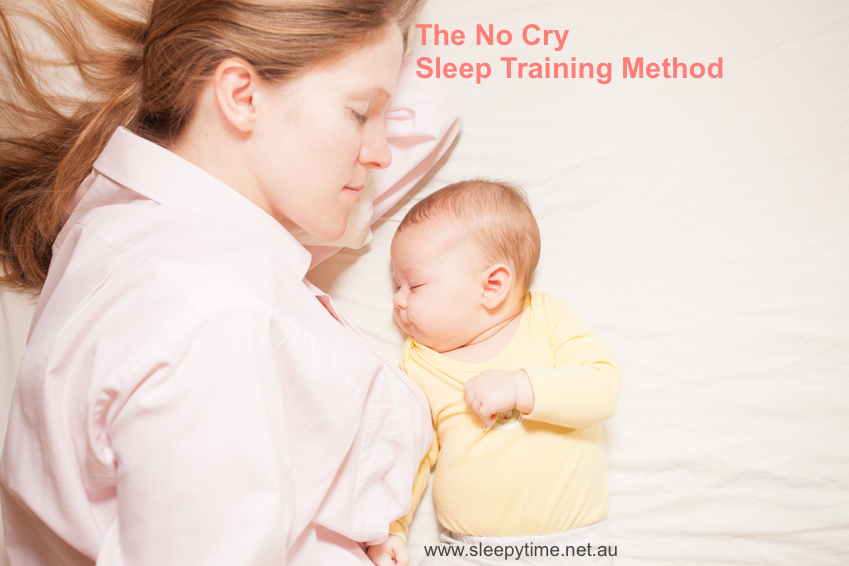
This method is very much about the attachment parenting philosophy and co-sleeping.


What is the No Cry Method?

The No Cry Method is an attachment parent philosophy of changing sleep habits whilst ensuring your baby does not cry at all. American Paediatrician, William Sears, author of many attachment parenting books including The Baby Book; Elizabeth Pantley The No Cry Sleep Solution and Pinky McKay Sleeping Like a Baby are all attachment parenting advocates who do write about baby sleep.

Interestingly the No Cry Method isn’t a specific approach like The Extinction Method, Ferber Method or Camp Out Method because attachment parenting often shies away from any sort of sleep training at all.

I have not personally used this method so I will give a brief overview and if you would like to know more, I recommend purchasing the books from the experts above.

What does the No Cry Method aim to achieve?

The goal is for the baby to have lots of assistance to fall asleep through feeding, rocking, cuddling and most importantly the emphasis is to continue to co-sleep. The aim is to reduce the help offered by the parent but to not fade it out completely. Many parents who choose this method wish to continue to co-sleep but want their baby sleep for longer stretches at night.

So how does the No Cry Method work?

  1. Your baby’s wants are put first at all times. If the baby wants to be fed, rocked, cuddled to sleep, then it is offered.
  2. By sleeping with and attending to your baby’s cry, the sacred bond is secure.

If your baby comfort sucks during the night, and you want to reduce this, you slowly try and unlatch your baby. If your baby reattaches, you try to gently unlatch them again. Repeat. You can also try to fade out rocking and patting in the same way. Over time you very slowly reduce the amount you offer this. If your baby begins to cry, you keep rocking, patting, then try again to stop the help. Repeat.

This method can make many months to see any change to your baby’s sleep.

Cons of the No Cry Method

  • It is a very, very, very slow approach to change. You may become frustrated and “give up” as progress takes many, many months.
  • Your baby may not respond to this very gentle method and some babies do not make any progress at all.
  • Your relationship with your partner may become strained if one parent does not want co-sleeping to occur.
  • You cannot 100% confirm that there will be no crying at all.
  • This method can be very fluid so you may become frustrated at the lack of step-by-step guidelines.

Pros of the No Cry Method

  • You can continue to bed share.
  • You can continue to night-feed.
  • You are able to offer physical and verbal comfort so it’s a very hands-on approach.
  • It is a very gentle approach to change.
  • It is inline with the attachment parent philosophy.

Final thoughts from me…

When choosing a method of sleep training it is important to remember that the approach is only one piece of the puzzle. Finding the cause of the difficult sleep comes first. Next you need to establish positive sleep cues for your baby. Lastly comes the sleep training method. With any sleep training method, it is really important to listen to your baby. When families work with me, quite often the method changes and evolves depending on how the baby is coping and the signs he is giving me.

The forms of sleep training methods that will be covered in this 4 part series are: The Extinction Method, The Ferber Method, The Camp Out Method and the No Cry Method.

Janelle Jeffery Child Sleep Consultant for Sleepytime
Janelle Jeffery
Child Sleep Consultant for Sleepytime
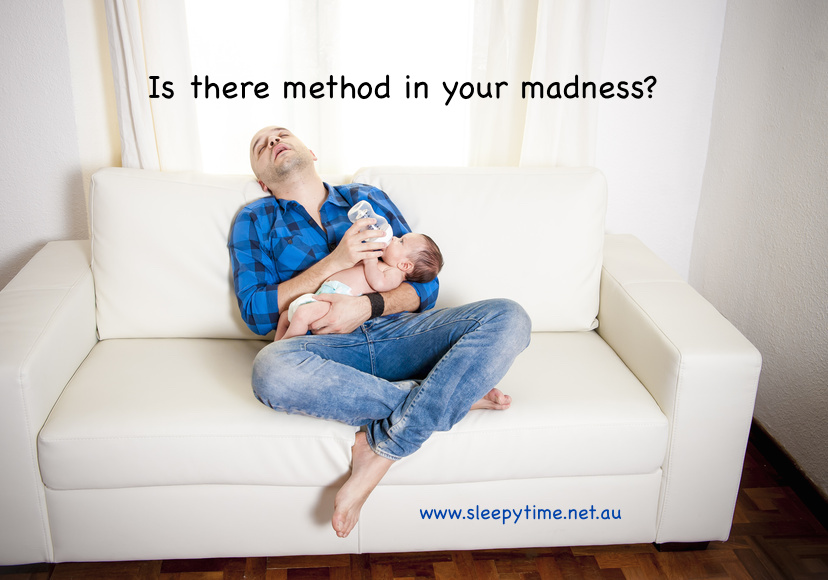


Is there method in your madness?

Have you felt like you have tried every method ever invented?


When I speak with frazzled parents about their child’s lack of sleep, I am always asked “I have tried everything and nothing has worked so why are you different?” and, “Do you practice “cry it out?”

I have considered this a lot lately because the “method” you use to help a child become an independent sleeper is engulfed in controversy. Everyone has an opinion and it is a polarising subject.

I want to let you in on a secret – it is not the method that is standing in the way of your child’s sleep success.

It doesn’t matter if you use {insert your method here}, they are all going to eventually fail because of this one thing. You haven’t actually addressed the root of the problem. If you don’t understand WHY your child is having difficulty sleeping through the night or is cat napping during the day, then whatever method you apply will not work because you are focusing on the wrong thing.

You sure are feeling frustrated, because you HAVE tried every method ever invented but you still have a child who cannot sleep. How do you solve this? Simple, hire me!

The first step before I write any sleep program is to perform a full sleep assessment. This enables me to establish the cause of your child’s sleep issue or issues. I make those necessary changes first. Next I look at establishing 5 sleep cues to prepare your child for sleep. The very last thing I decide upon is the method to achieve long-term sleep success.

So if you are tired of being tired and actually want to see the light at the end of the tunnel, contact me here. Change is ready for the taking, you just need reach out for my help.

Janelle Jeffery Child Sleep Consultant for Sleepytime
Janelle Jeffery
Child Sleep Consultant for Sleepytime