
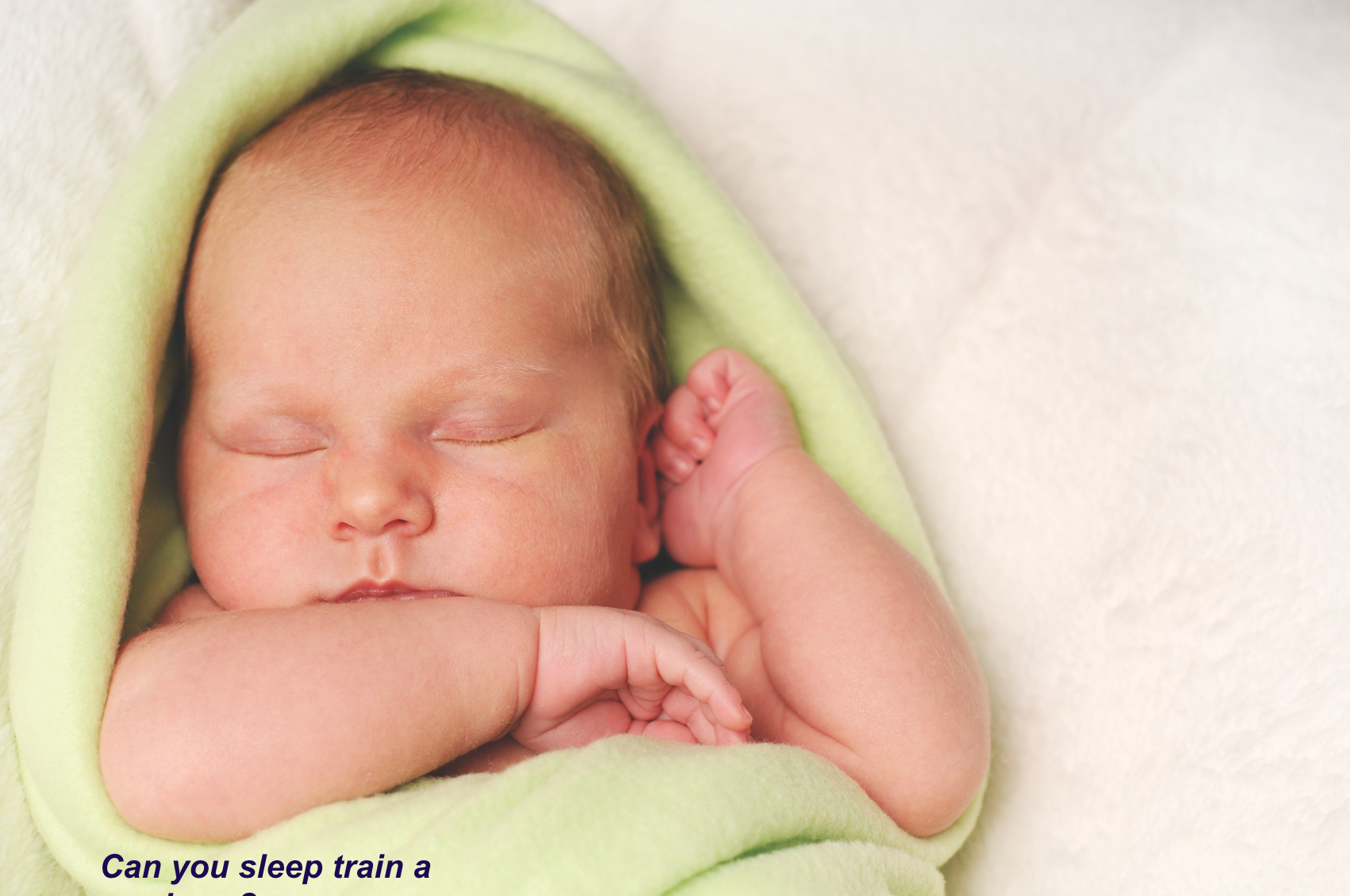

Parents often want to know when they can begin establishing healthy sleep habits. It really does pose the question – can you sleep train a newborn? So, you understand the importance of sleep but there is this “fear” that you will create really bad sleep habits for your baby. What should you do?
Firstly I want to clearly state my position regarding sleep training a newborn… I believe you cannot “sleep train” a newborn baby. After 12weeks, there are different techniques and methods more suited for younger babies you can begin to try if you are finding sleep difficult. Science dictates that the sleep cycle of a newborn differs greatly from the sleep cycle of a baby over 6months of age.
So what does this mean? You cannot do anything until 6months? No, in fact you can do lots of things in the interim to help your baby BEGIN to establish healthy sleep habits. Here are some things you can do from the moment you arrive home from the hospital.
1) Establish a bedtime routine.
Yep, starting a defined bedtime routine gives you and your baby a clear line between nighttime and daytime sleep. Incorporating a bath, a massage, a book or song before bed will become an important ‘sleep cue.’
2) Establish “good feeding.”
Make sure your baby is feeding properly. Is your baby latching correctly? Many babies are born with upper/lower lip-ties that make feeding difficult. A hungry baby will not sleep! If your baby has reflux, you may need to offer smaller feeds more often to prevent over-feeding causing discomfort. See a lactation consultant if you are finding feeding difficult.
3) Positive Sleep Environment.
When at home, try your best to allow your baby to sleep in a quiet room, in a bassinet or cot. This will encourage a better daytime sleep and it will help with nighttime sleeping too. If your baby is always in the sling napping during the day, it will be harder for them to sleep without it at night.
4) Understand your baby’s tired signs.
Newborns can roughly stay awake for about 45mins at a time. This means that by the time your baby has woken; you need to change the nappy, feed, burp and bond all in 45mins. It isn’t long before your baby is ready to sleep again. Really watch the clock AND your baby’s tired signs. An overtired baby will need a lot of ‘help’ to fall asleep or your baby may catnap instead.
5) Helping your baby to fall asleep.
Some babies need a lot of help to fall asleep, some babies need no help at all. Rocking, patting, cuddling to sleep are all great tools for newborns. There are no set rules around newborn sleep but keep in the forefront of your mind that as each week clocks on, you want to help your baby less and less to fall asleep initially and less help to resettle.
Having a newborn baby in the house can be stressful and demanding – but it is also such a special time that goes by far too quickly. This time is about bonding, feeding and sleeping for everyone involved!
To read more about newborn sleep, click here
Sleep Well,

Child Sleep Consultant for Sleepytime