Category Archives: Child Behaviour

Child Behaviour Topics

Preparing for the new school year – A sleep perspective

Learning is tiring. Sleep is vital for child development.

For some of you, February marks the first time your child will attend school. Some of us have been here before but many of us will be feeling worried about how our children will cope (me included!).

With only a couple of weeks of holiday left, making sleep your priority will enable your child to have a smoother start to the year. Preparing your child needs to start tonight.


1) The Bedtime Routine – what you need to know.

Length: If the bedtime routine has become quite relaxed over the summer, it is time to get back on track. The bedtime routine should take about 30-40mins tops otherwise it can drag out and your child will become overtired. An overtired child will either struggle to fall asleep and/or have night wake ups. Some children once overtired can experience night terrors.

Steps: Beginning the bedtime routine with a bath or shower as this can enable your child to unwind from the day’s events. A wash can relax the body, triggering the mind to get ready for sleep.

A simple bedtime routine would look something like this:

  • Toilet then bath or shower
  • Brush teeth
  • Pjs on and dim lights
  • Bed and book (limited to 1 or 2 depending on the length)
  • Kiss and a cuddle
  • Lights out then leave

Download your free bedtime routine chart here

Location: Where the routine takes place is just as important as the steps involved. Trying to keep the routine within the bathroom and bedroom environment creates a smoother transition into bed. It also reduces the risk of a bedtime battle as many children feel bedtime is a punishment because the fun continues without them.


2) Bedtime – Setting the ideal time for bed.

The first thing to keep in mind is that it will take about 15-20minutes (on average) for your child to fall asleep. So knowing that, if the time for bed is 8pm, then really your child is sleeping from 8:20pm. For some children this is too late. The old phrase “sleep begets sleep” means if your child is not getting enough sleep, they will run a ‘sleep debt’. This can cause night wakings and/or early rising and night terrors. Your child will sleep less even though in reality they need more.

Say over the summer 8pm has been working fine as your child has been sleeping later in the morning, you still need to consider that school will be starting soon, and your child will need to be up earlier in the morning. Jumping immediately to a 7pm may mean that your child will just lay awake until 8pm anyway. Your child may not lie there at all, but instead decide to come out multiple times trying to burn off the last bit of energy.

I recommend over the next few weeks to slowly push bedtime closer to 7/7:30pm. You can do this by moving bedtime forward every 3-5nights by 10-15mins. It would look something like this:

  • Nights 1-3  7:50pm bedtime
  • Nights 3-5  7:40pm bedtime
  • Nights 6-9  7:30pm bedtime

How quickly you alter the time for bed depends on how your child copes with change. Slower is ideal because adjusting your body clock takes time.


3) Daytime Naps – how to cope.

If your child still takes a daytime nap, you may want to go a day here and there without one before school starts. You are testing the waters really because you do not want the first day of school to be the first no nap day! This is to prepare your child for long days at school with little to no rest time. On those days make sure bedtime is super early.

If you feel your child is ready to drop the nap completely and you are not sure how, download my Nap Guide here.


Other considerations…

Starting the new school year is full of excitement (kids) and nerves (parents!). Enough sleep is crucial for a smooth transition. You child is going to be exhausted for the first few weeks so making sleep a priority before school starts is key.

If you know that your child is not a great sleeper, it may be time to seek help. Research suggests that,

“Sleep plays an important role in memory, both before and after learning a new task. Lack of sleep affects mood, motivation (and) judgement.”(HealthySleep)

A well-rested child is one who is open to learning, accepting of new experiences and willing to play with others.

If you are experiencing sleep troubles, book in your free 15min consultation with me at www.sleepytime.net.au/contact


Sleep well,

Janelle Jeffery Child Sleep Consultant for Sleepytime
Janelle Jeffery
Child Sleep Consultant for Sleepytime


Reference: www.healthysleep.med.harvard.edu



When will my baby sleep through the night?

Mother with child 

How many times have you been asked, “So, is he sleeping through the night yet?” It seems that sleeping through the night is some kind of measure of success as a mother. If your baby isn’t sleeping through then what are YOU doing wrong? Cue all feelings of guilt and failure now…


What does sleeping through really mean?

Everyone seems to have his or her own interpretation of what sleeping through the night means. Some people say it’s 5 straight hours, others say 12hours. I believe, once a baby enters the cot at night, say around 7-8pm, and self-settles through the night (not needing help from mum or dad to fall back to sleep) and wakes any time after 6-7am, is sleeping through the night. As adults, we will wake up through the night from time to time when we are in the light phase of sleep. Babies need to wake too; it’s just that they are a little noisier about it. If your baby has managed to fall back to sleep independently then they are sleeping through!


So, what about feeding through the night? Babies need to be fed through the night. Some babies will drop the night feed as early as 3months old and some babies will still require a feed at 8months old. If your baby is waking through the night for one to two feeds but he can fall back to sleep all on his own after the feed AND he can settle himself other times during the night, then I believe he is sleeping through.


When should my baby be sleeping through?

All babies are different. As said earlier, some babies will drop all night feeds as early as 3months old and can resettle themselves without the help of mum or dad and will sleep 12hours straight. This is not the norm. Lots of babies (if everything goes to plan) will start sleeping through and not needing a feed at about 6months old. Some babies will take a little longer.

If your baby is waking frequently during night needing to be fed back to sleep, rocked, cuddled, bounced etc then maybe it is time to seek help. Good quality sleep is vital for healthy development. Asking for help isn’t a sign of failure as a parent.

Every baby is different and sometimes all you need is a little guidance and support from someone in the know. Book here to have a chat together. During this time we can discuss the needs of your child, the support I offer and how you can achieve sleep success in a caring and loving way!   Sleep well!

Janelle Jeffery Child Sleep Consultant for Sleepytime Child Educator and Behaviour Specialist.
Janelle Jeffery
Child Sleep Consultant for Sleepytime.

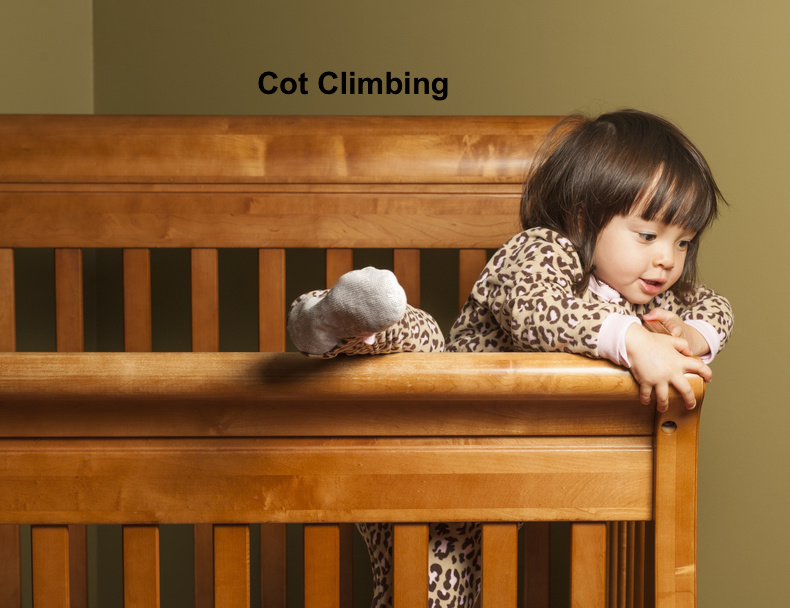
Toddlers who climb out of their cot

Cot or crib climbing can be scary for parents.

The first time your toddler climbs out of their cot can be really terrifying. Safety is paramount and it should never be ignored. Before you rush into buying a bed, there are a few things you can try first.

I am not a huge advocate for transferring toddlers immediately to a bed because many children under the age of 2.5years are not ready to understand the rules of being in a bed. There is always a honeymoon period whereby toddlers stay in bed, but before long your toddler has free roam of the house and that can be a bigger safety issue than climbing out of their cot.

If your toddler climbs out of their cot or attempts to climb out, here are a few tips and tricks to try:

1)    Find a sleeping bag that has limited legroom. This restricts access to your child being able to lift their leg and climb out.

2)    Lower the mattress. Some cots have a variety of height levels for the mattress. Make sure it is at the lowest level making it higher and harder to climb out.

3)    Remove any pillows, blankets or toys that can be used as leverage to get out. This may also include a dresser or drawers that butt up to the cot.

4)    Some cots are designed to have one side that is higher than the other. This side is usually pushed up against the wall. If you have this style of cot, turn it around so the outer side is higher making it more difficult to climb.


So you have tried all these things and your toddler is still climbing. This is what to try next:

1)    If you have a video monitor, every time your toddler attempts to climb out, either say “no” over the monitor or go into the room and say “no”. You may need to do this over and over again. Do not get into a long conversation about why they need to stay there. Simply “no” or “no climbing” and that is it.

2)    If you do not have a video monitor, keep the door ajar so you can still see your toddler. Every time they attempt to climb out, go into the room and say “no”. Again you may need to do this over and over again.

3)    If you are worried that your toddler may climb out once you are asleep, then make sure they have a safe landing. Many climbers can actually do it very safely. I recommend placing a mattress on the floor so they are not hurt if they do make it out of the cot.


If your toddler does manage to “escape” always walk them back, place them back into the cot and say, “no climbing”. Again you may need to repeat this over and over again. You need to be patient, calm and persevere.


It can be tempting to pack away the cot and buy a bed, but trust me, I have worked with many parents who find themselves with a toddler always hopping out of bed and either crawling into their bed or turning on the television at some crazy hour of the night. It can be even more dangerous if you have stairs or outside doors that can open easily. It is much harder to keep a toddler contained once they are in a bed.

If you have tried all these tips and tricks and you are still finding your toddler is climbing out, contact me here.

Janelle Jeffery Child Sleep Consultant for Sleepytime and Child Behaviour Specialist.
Janelle Jeffery
Child Sleep Consultant.


Does your child have difficulty separating from you?

Some children find separation very difficult.
Some children find separating from parents very difficult.

Do you have a child (2.5years and over) who is having a difficult time separating from you? There can be many different reasons why your child is feeling this way such as:

  • Change in living arrangements – a new bedroom, a new house or parent’s separating
  • Death of a loved one
  • Distance from parents due to the birth of a sibling
  • Separation due to parent/s work commitments especially fly-in-fly-out or interstate/overseas travel
  • Starting at a new day-care, kindergarten, or school
  • Is a sensitive soul or may just be a little more anxious than usual

Even if the reason your child having difficulty separating from you is not listed above, all children young and old need to know that their loved ones are close by. Many children will go through periods of being extra clingy. My daughter who is 5 is finding it really difficult leaving me in the morning at school. She has never been this way before. She attended day-care since she was 8months, and last year at kindergarten, it wasn’t really a problem. Now it is.

For some children separating from parents during the day is fine but when it comes to bedtime, they want you to start sleeping with them and for you not to leave them there alone. This is all normal and typical child behaviour but what I advocate is to try to reduce the stress and anxiety your child feels and for you to explain what is happening using ‘child-friendly’ language.

Though it is important to recognise what is happening with your child and attend to their needs so they feel loved and safe, it is crucial parents do not make the situation worse by making it bigger than it needs to be. Children are sensitive and they can pick up on our own feelings as much as we think we are good at hiding them. If we are tense and worried when it is time to say ‘goodbye’ then our children will sense that too.

If your child has trouble separating at night it is helpful to have a very special cuddly sleepy toy. Care-Bears are “old school” but excellent sleeping companions for older children. When you leave your child at night, come back and check in on them as they are falling asleep. Start with a 2minute check, then a 5minute check, then a 10minute check. By the time you do the final check, they should be asleep.

Care Bears are great companions for children.

Through my many years of teaching children, I find reading picture books a fantastic way to chat to them about what is happening in their world. The best book I have read and completely recommend is, “The Invisible String” written by Patrice Karst. This beautiful book is about helping adults and children understand that we are all connected and we are never truly alone. The aim of this book is to help alleviate your child’s fears from being apart from you and for your child to know they are truly loved no matter where in the world you are.

The Invisible String by Patrice Karst

Another way to help with separation is through distraction. If you are dropping your child off somewhere, it is best to get the ‘goodbyes’ over with pretty quickly. When their teacher or caregiver etc receives your child, they are best to distract your little one by getting them engaged with something fun immediately. This is the best time for you to go. If you hover around, the separation will become worse. Typically most children settle really quickly once you are gone. Know that if there is any further distress, the caregiver will call and let you know. It is important you have a great relationship with all the people in your child’s world.

Allowing your child the opportunity to express how they are feeling is a great way to not only connect with you, but to connect to their own thoughts and feelings. Often the route cause of tantrums is due to feelings they need to express. I have found “Kimochis” toys are a wonderful way to assist children with this. These soft toys come with “feelings characters” and help children identify what they are feeling at the time. Another way is to make a “feelings” chart with ‘feeling faces’ as this can be a reference point for your child.

Kimochis are toys that help children express their feelings.

If you have a child that is having difficulty separating from you, first of all, do not feel alone in this. All children go through this at some stage. If you can identify why they are feeling this way, then try to reduce their worry by implementing the suggestions in this post.

If you find night-time separation a real battle, then book in a chat together here.

Sleep well,

Janelle

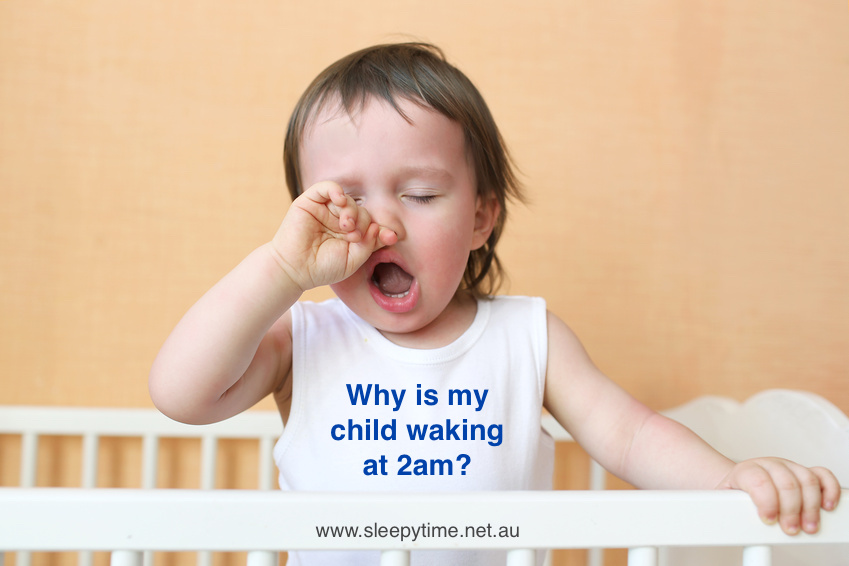
Why is my child suddenly waking at 2am?

Sleep is a very complex issue. Just when you think you have this gig sorted, your child begins to wake up again. There can be many explanations for this but sometimes the simplest answer can solve the problem. Is your child getting cold?

With summer gone, autumn brings unpredictable weather. Some nights it’s hot and you’re sweating, other nights you contemplate getting the electric blanket out.

As adults, we can regulate our temperature pretty well. When falling asleep we may have the fan on, then somewhere during the night we turn it off and pull the blankets up. Our children cannot do this for themselves. Keeping a regulated room temperature throughout the entire night is difficult and usually impossible to achieve. Here are some tips to help with the change in weather to prevent those 2am wake ups.

1. Use a sleeping bag but now increase the tog (blanket weight). Most sleeping bag companies will give you a guide as to what sleeping bag to use for each bedroom temperature. Not all houses are the same so choose the right one for your environment.

2. Choose what you dress your child in for sleep carefully. Choosing the correct sleeping bag tog is important but so is what you clothe your child in. Though the aim is prevent your child from waking up from the cold, you also need to make sure you are not over heating them either. Layers and full-length pyjamas will be needed soon.

3. If it is hot when your child first goes to bed, put a fan on. When it is time for you to go to bed, turn the fan off. Leaving the fan or air conditioner running all night will wake your child because they will get a chill.

4. If it is going to be a cooler night, also consider safely tucking in a lightweight wrap/blanket over your child when it is time for you to go to bed. Only use cotton or muslin wraps that are breathable as many other wraps can cause over-heating. Babies control their temperature through the face so it is vital that you follow all the recommendations for safe sleeping here to prevent the increased risk of Sudden Infant Death Syndrome.

So preparing your entire family for the cooler weather can prevent very early morning wake ups. Sometimes though it is a bit of trial and error.

Sleep Well,

Janelle Jeffery

Child Sleep Consultant for Sleepytime