
All posts by Janelle

Does your child have difficulty separating from you?

Some children find separation very difficult.
Some children find separating from parents very difficult.

Do you have a child (2.5years and over) who is having a difficult time separating from you? There can be many different reasons why your child is feeling this way such as:

  • Change in living arrangements – a new bedroom, a new house or parent’s separating
  • Death of a loved one
  • Distance from parents due to the birth of a sibling
  • Separation due to parent/s work commitments especially fly-in-fly-out or interstate/overseas travel
  • Starting at a new day-care, kindergarten, or school
  • Is a sensitive soul or may just be a little more anxious than usual

Even if the reason your child having difficulty separating from you is not listed above, all children young and old need to know that their loved ones are close by. Many children will go through periods of being extra clingy. My daughter who is 5 is finding it really difficult leaving me in the morning at school. She has never been this way before. She attended day-care since she was 8months, and last year at kindergarten, it wasn’t really a problem. Now it is.

For some children separating from parents during the day is fine but when it comes to bedtime, they want you to start sleeping with them and for you not to leave them there alone. This is all normal and typical child behaviour but what I advocate is to try to reduce the stress and anxiety your child feels and for you to explain what is happening using ‘child-friendly’ language.

Though it is important to recognise what is happening with your child and attend to their needs so they feel loved and safe, it is crucial parents do not make the situation worse by making it bigger than it needs to be. Children are sensitive and they can pick up on our own feelings as much as we think we are good at hiding them. If we are tense and worried when it is time to say ‘goodbye’ then our children will sense that too.

If your child has trouble separating at night it is helpful to have a very special cuddly sleepy toy. Care-Bears are “old school” but excellent sleeping companions for older children. When you leave your child at night, come back and check in on them as they are falling asleep. Start with a 2minute check, then a 5minute check, then a 10minute check. By the time you do the final check, they should be asleep.

Care Bears are great companions for children.

Through my many years of teaching children, I find reading picture books a fantastic way to chat to them about what is happening in their world. The best book I have read and completely recommend is, “The Invisible String” written by Patrice Karst. This beautiful book is about helping adults and children understand that we are all connected and we are never truly alone. The aim of this book is to help alleviate your child’s fears from being apart from you and for your child to know they are truly loved no matter where in the world you are.

The Invisible String by Patrice Karst

Another way to help with separation is through distraction. If you are dropping your child off somewhere, it is best to get the ‘goodbyes’ over with pretty quickly. When their teacher or caregiver etc receives your child, they are best to distract your little one by getting them engaged with something fun immediately. This is the best time for you to go. If you hover around, the separation will become worse. Typically most children settle really quickly once you are gone. Know that if there is any further distress, the caregiver will call and let you know. It is important you have a great relationship with all the people in your child’s world.

Allowing your child the opportunity to express how they are feeling is a great way to not only connect with you, but to connect to their own thoughts and feelings. Often the route cause of tantrums is due to feelings they need to express. I have found “Kimochis” toys are a wonderful way to assist children with this. These soft toys come with “feelings characters” and help children identify what they are feeling at the time. Another way is to make a “feelings” chart with ‘feeling faces’ as this can be a reference point for your child.

Kimochis are toys that help children express their feelings.

If you have a child that is having difficulty separating from you, first of all, do not feel alone in this. All children go through this at some stage. If you can identify why they are feeling this way, then try to reduce their worry by implementing the suggestions in this post.

If you find night-time separation a real battle, then book in a chat together here.

Sleep well,

Janelle
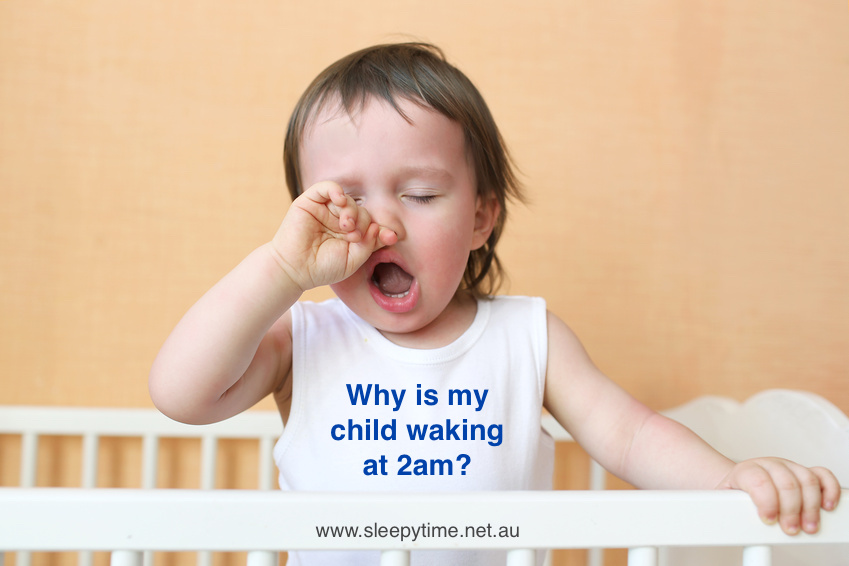
Why is my child suddenly waking at 2am?

Sleep is a very complex issue. Just when you think you have this gig sorted, your child begins to wake up again. There can be many explanations for this but sometimes the simplest answer can solve the problem. Is your child getting cold?

With summer gone, autumn brings unpredictable weather. Some nights it’s hot and you’re sweating, other nights you contemplate getting the electric blanket out.

As adults, we can regulate our temperature pretty well. When falling asleep we may have the fan on, then somewhere during the night we turn it off and pull the blankets up. Our children cannot do this for themselves. Keeping a regulated room temperature throughout the entire night is difficult and usually impossible to achieve. Here are some tips to help with the change in weather to prevent those 2am wake ups.

1. Use a sleeping bag but now increase the tog (blanket weight). Most sleeping bag companies will give you a guide as to what sleeping bag to use for each bedroom temperature. Not all houses are the same so choose the right one for your environment.

2. Choose what you dress your child in for sleep carefully. Choosing the correct sleeping bag tog is important but so is what you clothe your child in. Though the aim is prevent your child from waking up from the cold, you also need to make sure you are not over heating them either. Layers and full-length pyjamas will be needed soon.

3. If it is hot when your child first goes to bed, put a fan on. When it is time for you to go to bed, turn the fan off. Leaving the fan or air conditioner running all night will wake your child because they will get a chill.

4. If it is going to be a cooler night, also consider safely tucking in a lightweight wrap/blanket over your child when it is time for you to go to bed. Only use cotton or muslin wraps that are breathable as many other wraps can cause over-heating. Babies control their temperature through the face so it is vital that you follow all the recommendations for safe sleeping here to prevent the increased risk of Sudden Infant Death Syndrome.

So preparing your entire family for the cooler weather can prevent very early morning wake ups. Sometimes though it is a bit of trial and error.

Sleep Well,

Janelle Jeffery

Child Sleep Consultant for Sleepytime


Do you want nap time success?

Mastering naps can be tricky.

Almost all parents at some stage of their child’s life find naptime difficult. Some naptime issues include:

  • Your child needs your help to nap;
  • Your child finds it difficult to fall asleep at all; or
  • Your child only catnaps.

There are many more nap problems that I haven’t included here but these are definitely the most common. If you are experiencing difficult naps, here are my tips for better nap time success:

1. Sleeping independently

This is a big one. What I find is if you are helping your child to fall asleep (rocking, patting, feeding, dummy, bouncing etc) to sleep, often these sleep associations have an expiry date of usefulness. With a newborn the rules are different. Feeding to sleep was fine, but eventually that will stop working for you, so you move on to say, rocking to sleep. Now your child is too heavy so you change to patting. Suddenly you realise that your ‘bag of tricks’ is empty and your child still isn’t sleeping on their own. Now it is time to place your child into the cot completely awake without your help so they can begin to establish their own tools to fall asleep. Easier said than done right? If you need some help, contact me here.

2. Provide a ‘sleepy’ environment

Again, newborns can usually sleep anywhere. Once your baby passes this newborn phase, it is important that the majority of the time they are sleeping where it is dark and fairly quiet. If you have a noisy house during they day, white noise can help. Try to make the room as dark as you can. Why? Darkness helps the body to produce melatonin that makes us sleepy. The temperature of the room needs to be on the cooler side (not cold). If you cannot change the temperature, dress your child in lightweight clothing. If your child is too hot, it is harder to sleep.

3. Send the message it is “sleepytime”

Most parents have the bedtime routine down pat, but forget to send the same message at nap time. Your child needs the cue that it is “sleepytime”. It may seem obvious to us the cot is there, so it must be “sleepytime”, BUT babies need time to unwind and understand what is happening at that moment.

Here is an example of a nap routine:

  • Go into the bedroom
  • Change nappy
  • Sit and read a quick story
  • Kisses and cuddles
  • Say “it’s sleepytime”
  • Into the cot awake

4. Allow time to resettle

Some children’s cries will go from nothing to hysterical in less than a minute. When your child wakes up after the first sleep cycle (30-45mins), he will cry out and you will run in immediately. This is part of being a responsive parent right? Yes totally but the problem with rescuing your child so quickly is that they are still tired and not finished napping. This is the reason they are so upset. Your child really wants to sleep more but they are not sure how too. If your child isn’t falling asleep independently at the beginning of the nap, then clocking on to the next sleep cycle without your help is difficult. Don’t be afraid to wait a little to allow them the chance to fall back to sleep. Always listen to the cries and if there are breaks, then just wait a little. If you are needed, try for 10-20mins to extend the nap by offering some gentle touch. This won’t be easy at first, but the more you do it, the better the chance you will be successful.

Combating naptime struggles are often frustrating and exhausting for not only you, but also for your child. Naps do take a lot of time to perfect, and just when you think you have it all sorted, it is time for your baby to drop a nap. If you wonder if your child is ready to drop a nap, download the “Sleepytime Guide to Mastering Nap Transitions” here.

Sleep well,

Child Sleep Consultant for Sleepytime

5 Top Tips To Reduce Bedtime Battles


The bedtime battle is exhausting

In an ideal world, bedtime would be the best time of the day where you get to share some special time with your child or children as they unwind and get ready for bed. You share stories about the day, read books, give lots of kisses and cuddles then they drift peacefully off to sleep.

Now in the real world, that seldom happens. As you merely mention the word “bath time” or “bedtime” world war three erupts. You throw them over your shoulder as you wrestle each other to the bathroom. As you try to rip their clothes off, they run away from you. You manage to catch their nose on the neckline and suddenly they are in tears and so are you. You give up on the bath, forgo story time, turn on the telly you all fall asleep on the couch through total exhaustion.

I remember a few years ago I would send myself to timeout, as I was afraid of what I would do if I stayed there any longer. YOU ARE NOT ALONE!! So, through my own personal experience, here are a few tips to help ease that bedtime battle…


Play before bath

After dinner is the best time to offer your child a time to play. When it is approximately 30-40minutes before lights out, this is the ideal time to start your bedtime routine. The routine starts with a bath or shower, and ends up in the bedroom with lights out. The bedtime routine is isolated in the bedroom and bathroom only as this becomes the cue that it is “sleepytime”.

Give a heads up

Approximately 5 minutes before the bedtime routine begins, give your child a warning that playtime is nearly over and bath time is about to begin. Imagine you are halfway through painting your nails and you are told to down tools and head to bed. I would say you would be pretty annoyed at being yanked away, plus you haven’t finished yet. Now imagine you get your nail varnish out and I say “you have 5minutes until bath time”. Now you have the choice to quickly paint your nails or choose something else less time consuming. You can even set a timer and once it goes off, it is time to stop playing.

Walk and talk

Once playtime is over, walk and talk. Say “I am heading to the bathroom, I will see you there.” This enables you to be out of the room before the negotiating or arguing starts. You can even make it fun. Tonight we are going to stomp like dinosaurs. Tonight we are going to fly like birds. This is making the transition fun and a slight extension of play.

Offer specific praise

Children love to please. They want to be recognised for doing good deeds. Offer praise and lots of it, BUT make sure the praise is specific to what they are doing. If your child stops playing and heads to the bathroom without a fuss, by saying “good boy” or “good girl” has no meaning to them. If you change it by saying “I liked how you came to the bathroom straight away” allows the child to understand exactly what behaviour pleases you. “I noticed you got into the bath quickly tonight.” Being clear is really important.

Be consistent

There will be some nights when your child will be a true angel and bedtime is a magical experience. There will be some nights when your child is over it and just wants to do what they want to do. Regardless, if you are 100% consistent with your evening routine, YOUR BATTLES WILL BE REDUCED immensely. If one night you are strict with the 5minute warning and the next you give in and agree to 5minutes more, you will inevitably create a bigger bedtime battle.

Children love routine and consistency even if at times they seem to want to resist it. After over a decade of working with children I know this is a definite fact. If you chop and change the rules, your child will be confused and you will pull your hair out.

All in all, bedtime should be a lovely part of your day. If you can keep it a positive and loving experience instead of a screaming match, you will begin to see the change pretty quickly. Every family goes through this bedtime battle from time to time so you are not alone.


Sleep well,

IMG_1856Janelle

Child Sleep Consultant for Sleepytime

Is your child a fussy eater?

It can be exhausting when your child refuses to eat.


This week the hot topic of conversation with my friends and clients has been regarding eating (or lack of) amongst our children. There is always great concern about trying to encourage our children to eat more. I work with parents to help their children learn to love sleep, but time and time again I am seeing a link between fussy eaters and poor sleepers.

Two common causes of children not wanting to eat are; too much milk and lack of sleep.

MILK

Milk is a great food source so I am not here to persuade you to stop giving it to your children, but what I want to highlight is how it can impact on lack of appetite.

Imagine you had two large milkshakes a day. How much solid food would you be able to consume during the day after that? My guess is not much. If your child is drinking copious bottles of milk during the day and night, then chances are they are not that interested in much else. Milk is drunk quickly and easily and it makes you feel full for a long time.

With the many families I have worked with, once we reduce or even eliminate the milk during the night, we observed an almost instant increase in appetite during the day. This all depend on the age of the child of course.

Breast-milk or infant formula should be the main source or nutrition for the first 9months of age. After this time, your child should be eating “three meals a day and the frequency of milk feeds is beginning to decline,” Mererilinga (2011). By 12months of age, many babies substitute breast-milk or infant formula with cow’s milk. Regardless of which form or milk your child is offered, by this time solid food becomes more important.

It is important to note that drinking lots of cow’s milk is not necessarily a good thing. “In fact, milk makes it harder for the body to absorb iron and can contribute to iron-deficiency anaemia”. Kid’s Health.

So how much is enough? Well, it is all about balance. It is recommended that toddlers aged between 2-3 years have 1.5 serves of dairy a day. It should come from a variety of food sources, not just milk. Raising Children Network.

If your child is having multiple milk feeds or bottles during the night past 8 months of age, chances are they are not only full during the day, but they are not getting enough sleep.


LACK OF SLEEP

A tired child will not want to eat. As adults, the more tired we are, the more we tend to eat. In my experience, I find the opposite happens for many children. If a child is tried, they do not want to sit there at the table and eat a full meal. It is too much like hard work.

If your child is tired, offering them an early dinner is far more beneficial than stretching them out to their usual set dinnertime. If you do try and delay dinner, chances are you will have a battle on your hands and your child will refuse to eat. Offer an occasional 4:30pm dinner to ensure they have enough energy to eat.

If your child is up multiple times during the night, and certainly if they are still taking milk during the night, I would bet that they are not interested in eating breakfast. You want your child to wake up in the morning feeling refreshed and HUNGRY!!


Case Study

Often too much milk and lack of sleep go hand in hand. Last year I worked with Amelia (15months) who was still taking up to 4 breast-feeds in the night. She never wanted breakfast and she was a picky eater throughout the day. Once we cut out the feeds in the night and she starting sleeping through, Amelia’s appetite increased ten fold. Her parents could not believe in just two nights how hungry Amelia was in the morning and she was eating a huge breakfast.

If your child is a fussy eater, monitor how much milk they are consuming in a 24hour period. Also monitor their sleeping patterns. Below is a guide to the average amount of sleep your child should be having each day.


Age Hours of Sleep per 24hrs
Newborn – 3 months 16-18 hrs
3 months – 6 months 15-16 hrs
6 months – 12 months 14-15 hrs
12 months – 3 years 13-14 hrs
3 years – 5 years 11-13 hrs


Healthy eating and healthy sleeping are crucial to helping your child develop the best way they can. If you are concerned about your child’s food intake, consult a child nutritional professional or your doctor. If you are concerned about your child’s lack of sleep, visit here.


Child Sleep Consultant for Sleepytime


Janelle Jeffery