Tag Archives: child sleep

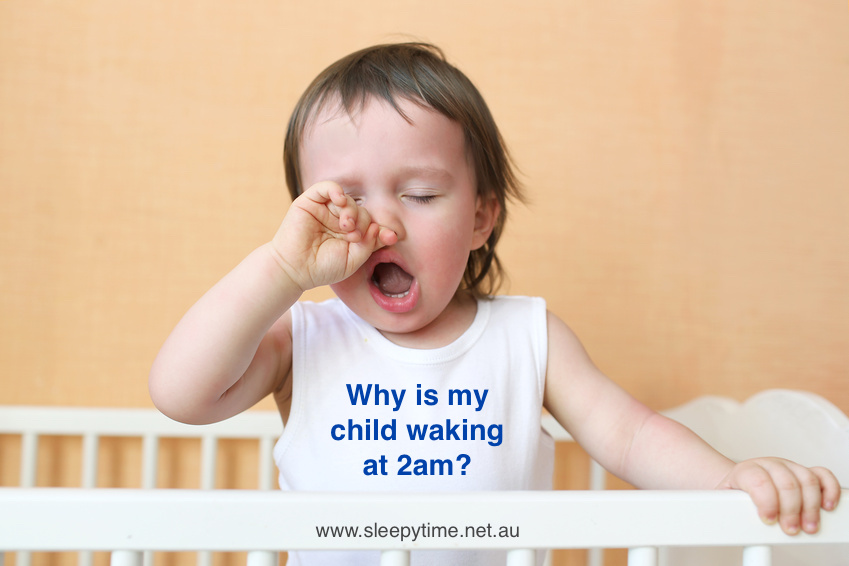
Why is my child suddenly waking at 2am?

Sleep is a very complex issue. Just when you think you have this gig sorted, your child begins to wake up again. There can be many explanations for this but sometimes the simplest answer can solve the problem. Is your child getting cold?
With summer gone, autumn brings unpredictable weather. Some nights it’s hot and you’re sweating, other nights you contemplate getting the electric blanket out.

As adults, we can regulate our temperature pretty well. When falling asleep we may have the fan on, then somewhere during the night we turn it off and pull the blankets up. Our children cannot do this for themselves. Keeping a regulated room temperature throughout the entire night is difficult and usually impossible to achieve. Here are some tips to help with the change in weather to prevent those 2am wake ups.

1. Use a sleeping bag but now increase the tog (blanket weight). Most sleeping bag companies will give you a guide as to what sleeping bag to use for each bedroom temperature. Not all houses are the same so choose the right one for your environment.

2. Choose what you dress your child in for sleep carefully. Choosing the correct sleeping bag tog is important but so is what you clothe your child in. Though the aim is prevent your child from waking up from the cold, you also need to make sure you are not over heating them either. Layers and full-length pyjamas will be needed soon.

3. If it is hot when your child first goes to bed, put a fan on. When it is time for you to go to bed, turn the fan off. Leaving the fan or air conditioner running all night will wake your child because they will get a chill.

4. If it is going to be a cooler night, also consider safely tucking in a lightweight wrap/blanket over your child when it is time for you to go to bed. Only use cotton or muslin wraps that are breathable as many other wraps can cause over-heating. Babies control their temperature through the face so it is vital that you follow all the recommendations for safe sleeping here to prevent the increased risk of Sudden Infant Death Syndrome.

So preparing your entire family for the cooler weather can prevent very early morning wake ups. Sometimes though it is a bit of trial and error.

Sleep Well,

Janelle Jeffery

Child Sleep Consultant for Sleepytime


Toilet Training and Sleep

It is such a momentous time in your child’s life when they become free of nappies and are learning to toilet train. Unfortunately this huge change in your child’s life can really affect sleep.

Toilet training can really affect your child's sleep.
Toilet training can really affect your child’s sleep.

1. Increased night wake ups

Just like any other developmental milestone, the brain is very active at night making sense of all the new information it has learnt. A very active mind can cause your child to wake up more frequently. If your child could sleep independently before toilet training began, then they can during and after – as long as you are consistent with your approach. You may need to attend to your child more frequently during the night, but once you know they are fine, then leave them to fall asleep on their own without your help.

2. Toilet requests at bedtime

Always include a trip to the toilet before a nap and before bedtime in your standard sleep time routine. For a while your child may call out and request a visit to the toilet. This can be difficult for parents as it can feel like a stalling technique. I am sure your child will eventually realise it can be used as one so your judgement here is crucial. If you have had 3 visits to the toilet with no success, then ignore any other requests past that point. You may have a few accidents in bed, but that is part of the joy of toilet training.

3. Requests during the night

So your child is now waking up during the night to go to the toilet. This again is part of the process of learning those toileting cues. Yes you may have a few months of getting up during the night, but again, once your child has been to the toilet, leave them alone to fall asleep independently.

4. Milk at bedtime

If you are still including a bottle or cup of milk during the bedtime routine, I urge you to cut this out of the routine once toilet training has commenced. This will reduce the midnight visits to the toilet.

A child learning how to use the toilet can be a fast or slow process. Not all children are the same so the more relaxed and chilled out you are about it, the better it will be all round. Yes your child’s sleep will be disturbed for a while, but if you are consistent with your approach and you continue to encourage independent sleeping habits, the easier it will be for everyone.

autherimg


Janelle Jeffery

Child Sleep Consultant for Sleepyime

No nap- No Way!

nonapSince my daughter turned three, everyone was telling me to drop that nap! My daughter was always late to drop all her previous naps, so I wanted her to keep it for two main reasons:

1- I wanted her to be ready
2- I wasn’t ready

When she hit 3.5yrs the first point came true- she was showing signs of dropping the nap. Miss E would either fight going down at all, or she would sleep for three hours or more. The long nap seemed like a gift- but what it would mean was that she took forever to fall asleep at night. Some nights it took over an hour for her to finally fall asleep and that was with numerous visits to her bedroom begging her to ‘settle down’ or sternly stating, “it’s sleepytime” over the monitor.

BUT- I wasn’t ready. How would I get all my jobs done during the day without it? Where would I squeeze in “my time” during the day? No nap- no way!

A close friend gave me a reason that finally encouraged me to give it up. She said, “Think about all the things you WILL be able to do during the day. Not having to fly home in the middle of the day for her nap is a bonus.” Ok I may be losing out in some areas, but having the freedom to go out and stay out sounded wonderful. I was ready to give it a go.

Whenever you change a child’s sleep situation, you need to be patient to allow for the body to adjust. For quite a few weeks, Miss E would be really tired during the day and she would even fall asleep in the car. I decided that on some days I would pop on a movie after lunch and let her snuggle her cuddly toy. This allowed me to have some time to myself and it gave her quiet time without the sleep. This really worked well for us.

Ok- occasionally I do offer that midday nap. I am very concerned about Miss E becoming ‘overtired’ so if I really feel that she is just not going to make it until bedtime without a meltdown – I limit the nap to 1 hour and I put her to bed later in the evening.

Since accepting that Miss E was getting older and saying ‘farewell’ to the nap, night times have improved ten fold.

Even though friends and my own expertise were telling me to do something, until I was ready to make that change, I felt it just wasn’t going to work.

Are you ready to drop that nap? To purchase a comprehensive guide to nap transitions, click here.

Sleep well,

Janelle Jeffery

Does your child have ‘Jack-in-the-box’ syndrome?

jackintheboxWhat did you say? I said ‘Jack-in-the-box syndrome! This is a child who just loves getting out of bed to see where you are and what you are up too- all hours of the night!!! You walk them back to their bed, and before you know it they are hot on your heels.

This can be frustrating and exhausting for parents who eventually ‘give in’ and let their child either sleep on the couch or hop into their bed, just so the family can get a little sleep. This problem is very common and it usually starts around 2-3 years of age. I speak with many families whereby the dad has been banished from the bed altogether. This sleeping arrangement is not sustainable, nor is it healthy for your relationship with your partner. Your bed is YOUR bed and that is the way it needs to be so you can all get a good night’s sleep.

So, what can you do to solve this problem?

Wait to Transition into a Bed

I would not transition a toddler into a ‘big bed’ until at least 2.5 years of age. The later, the better! Many parents transition their child far too early, trying to fix an existing bad sleep situation only to find it’s worse now they have the freedom to get out on their own.

Communication

Even if your child is not completely verbal, their understanding is amazing. During the day set the expectations for the night in simple ‘kid-friendly’ language. Tell them they will stay in bed the entire night until it’s morning time (at least 6am). I like using a visual timetable that outlines each step of the bedtime routine with the last picture showing them in their bed. Get creative! Bedtime is non-negotiable from here on in.

Rewards

Children are egocentric. If there is something in if for them, they will want to do it. Get a reward chart ready to go and make a big deal about it. Get a ‘treat bag’ and fill it with little surprises. These do not need to be expensive. Items such as books, hair clips, cars and play-dough work well. Each night they remain in their bed, they will earn a sticker on their chart as well as a treat from the bag. Work towards a surprise at the end, like an outing or a special toy.

Consistency

Children test boundaries. They need to know that the rules are the rules no matter what. Rules enable them feel safe and secure in their environment. Children will try and try again to work around the rules BUT really they want you to say ‘NO’. Once you ‘give in’ you will create a bigger problem. Children quickly learn that you mean what you say only some of the time. You need to be strong and firm and have routines in place. If you are consistent all of the time, then the transition will be a lot easier. Change is hard for everybody and it will be met with some protest from your child. Remember you are doing what is best for them AND for your entire family.

Fun

Make bedtime fun. You don’t want your little one dreading bedtime because it’s when they are banished to their room, alone, missing out on the fun elsewhere. Sing songs, read a book together, talk about the day. Purchase some special pyjamas and let them choose which ones to wear.

All children at some stage will want to get out of bed and hop into yours. Armed with this knowledge, the key to success is to be prepared for it. Each night needs to be predictable and you need to be consistent. I have provided some simple tips that can certainly improve the sleep situation overall. The good news is that it is achievable but toddlers/children can be tricky customers. If you find that it is all too difficult, remember I can help you to solve this once and for all with a tailored plan and support program. Contact me here for more information.

Sleep Well,

Janelle Jeffery